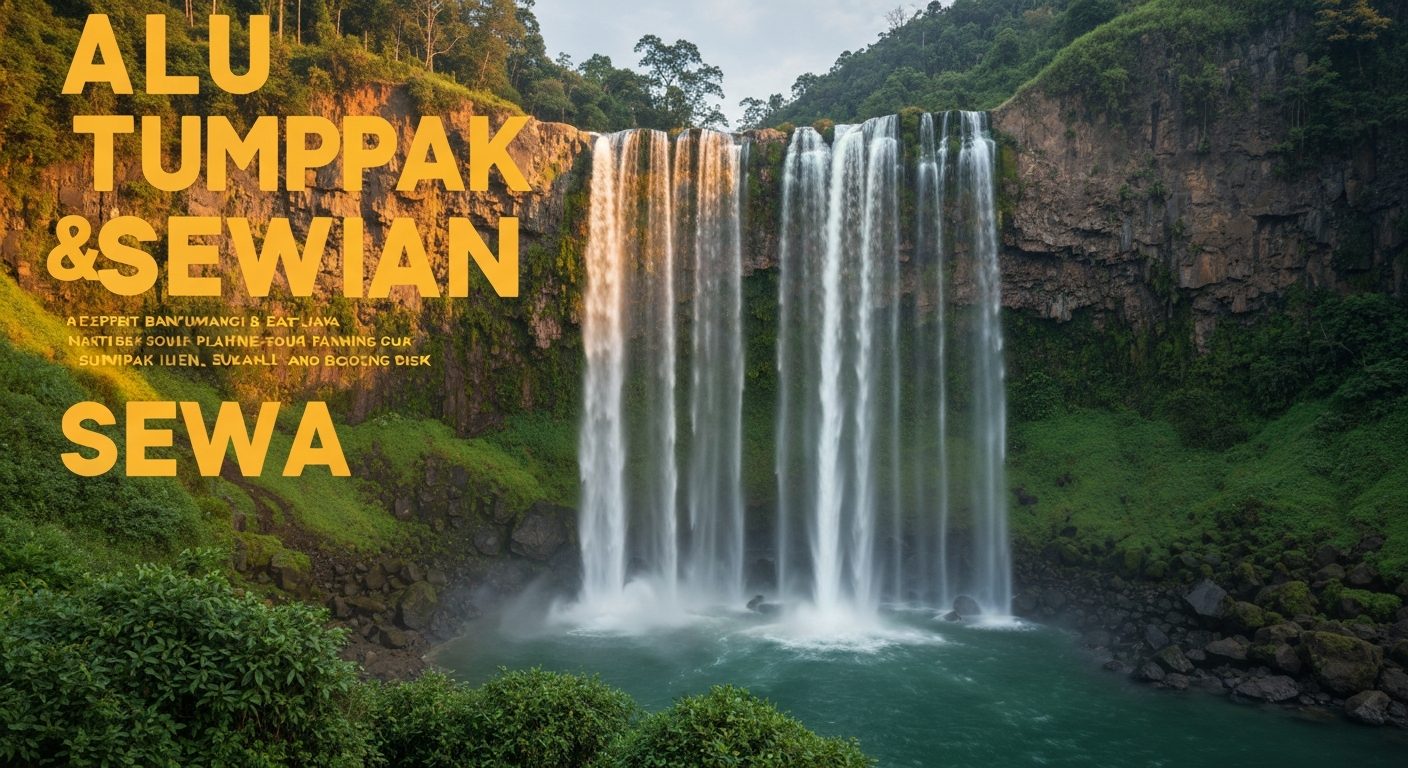
Tumpak Sewu is Indonesia’s most awe-inspiring curtain waterfall, often called the tumpak sewu thousand waterfalls niagara due to its unique amphitheater of cascading water. Located in Lumajang Regency, East Java, this natural wonder is a powerful, tiered cascade on the Glidik River, offering an experience unlike any other in the region.
From my decade tracing the trails of East Java’s most remote and celebrated natural sites, Tumpak Sewu stands apart. It’s not just a single drop; it’s a vast, horseshoe-shaped cliff face adorned with countless streams tumbling from a height of approximately 120 meters. This makes it an essential stop for any traveler seeking raw, untamed beauty in East Java, and understanding its seasons and photographic opportunities is key to a rewarding visit.
What Makes Tumpak Sewu the “Thousand Waterfalls” and “Niagara of Indonesia”?
The moniker “Niagara of Indonesia” is a fitting description for Tumpak Sewu. Unlike a single, monolithic waterfall, Tumpak Sewu presents a broad, concave curtain of water, stretching across a wide cliff face. This natural amphitheater, carved by centuries of water flow from the Glidik River, creates the illusion of countless individual falls merging into one colossal spectacle.
The tumpak sewu curtain waterfalls 120 meters height plunges into a lush, emerald basin, creating a continuous roar that resonates through the canyon. From a distance, especially from the panoramic viewpoint, you see not one waterfall, but hundreds of thin streams appearing like delicate silver threads against the dark rock, earning it the additional name of the “thousand waterfalls.” This sheer scale and unique formation differentiate it dramatically from other waterfalls in Indonesia, drawing comparisons to the world-famous Niagara Falls for its impressive breadth and volume, even if on a smaller overall scale. The experience of seeing it, whether from above or below, is nothing short of humbling.
Tumpak Sewu Waterfall Location: Getting There from Banyuwangi and Beyond
Tumpak Sewu waterfall is situated in Sidomulyo Village, Pronojiwo District, Lumajang Regency, East Java. While it feels wonderfully remote, it is accessible from several key East Java hubs. For travelers basing themselves in Banyuwangi, the journey to Tumpak Sewu is a significant part of the adventure, typically involving a drive west.
From Banyuwangi, reaching Tumpak Sewu usually takes around 5 to 6 hours by car, depending on traffic and road conditions. The route often involves passing through Jember or Probolinggo. Many travelers combine a Tumpak Sewu visit with other East Java highlights like Mount Bromo or Kawah Ijen. If you’re coming from Mount Bromo, the drive to Tumpak Sewu is approximately 2 to 3 hours, making a bromo tumpak sewu tour a popular and logical itinerary. From Malang, another major East Java city, Tumpak Sewu is roughly a 2.5 to 3-hour drive.
The final approach to the Tumpak Sewu site involves local roads that can be narrow and winding, especially as you get closer to the village. Parking is available, often managed by local communities. From the parking area, access to the viewpoints and the descent trail begins. Planning your logistics with an experienced local team, like ours at Bali Premium Trip, ensures smooth transfers and navigation of these local conditions. We arrange all ground transfers with our vetted drivers, providing peace of mind from door to door.
Tumpak Sewu Waterfall Best Time to Visit: Dry Season vs. Rainy Season
Understanding the seasonality is crucial for planning your Tumpak Sewu experience. The two distinct seasons in East Java offer different perspectives and challenges. Deciding the tumpak sewu waterfall best time to visit depends entirely on what you prioritize: maximum water volume or safest access.
Tumpak Sewu Dry Season: April to October
The tumpak sewu dry season april to october is generally considered the best period for a visit, especially if you plan to descend to the canyon floor.
- Advantages:
- Safest Descent: The trails leading down to the base of the waterfall are less slippery, and water levels in the river at the bottom are typically lower and more predictable. This significantly reduces the risk of accidents and makes the trek more manageable.
- Clearer Views: While there’s still mist, the drier air often leads to clearer skies, enhancing visibility from the panoramic viewpoints.
- Better Photography Conditions: Less rain means less chance of your gear getting soaked, and the sunlight penetration can be ideal for capturing the falls.
- Easier River Crossings: The Glidik River, which you cross at the bottom, has a milder flow, making passage simpler.
- Disadvantages: The water volume, while still immense and impressive, might be slightly less compared to the peak of the rainy season. However, for a waterfall of this scale, it remains a powerful spectacle.
Tumpak Sewu Rainy Season: November to March
The tumpak sewu rainy season flooding water flow brings a different kind of drama to the falls.
- Advantages:
- Maximum Water Volume: The waterfalls are at their most powerful and voluminous during the rainy season. The curtain of water appears even thicker and more dramatic.
- Lush Surroundings: The surrounding vegetation is incredibly vibrant and green.
- Disadvantages:
- Slippery Trails: The descent path becomes extremely slick and muddy, significantly increasing the difficulty and risk.
- Flooding and Water Flow: The Glidik River can swell rapidly, making river crossings dangerous or impossible. Local authorities often restrict access to the canyon floor during heavy rains for safety reasons. In such cases, only the top panoramic viewpoint is accessible.
- Reduced Visibility: Frequent rain showers and increased mist can obscure parts of the falls or lead to overcast skies, impacting photography.
- Access Restrictions: It’s not uncommon for the lower path to be closed due to safety concerns from flooding or landslides.
For most travelers, especially those planning to experience the waterfall from both the top and the bottom, the dry season offers the optimal balance of safety, accessibility, and visual clarity.
Tumpak Sewu Photography: Golden Hour Morning and Key Locations
Capturing the grandeur of Tumpak Sewu requires careful timing and an understanding of the best vantage points. For photographers, the most coveted window is the early morning, particularly during the tumpak sewu photography golden hour morning.
Tumpak Sewu Photography Tips Locations Viewpoint
There are two primary locations to photograph Tumpak Sewu, each offering a distinct perspective:
- The Top Panorama Viewpoint:
- Access: This is the easiest and most accessible viewpoint, located just a short walk from the parking area. It offers a sweeping, wide-angle vista of the entire horseshoe-shaped curtain of water.
- Best Time: Arrive as early as possible, ideally for sunrise. As the sun rises in the east, it begins to illuminate the mist and the falls, creating a magical glow and often producing rainbows. The soft, diffuse light of the golden hour is perfect for capturing the scale without harsh shadows.
- Tips: Use a wide-angle lens (16-35mm or wider on full-frame) to encompass the full breadth of the falls. A tripod is invaluable for long exposures, which can smooth out the water and create a silky effect. Be prepared for mist, even from a distance, and bring a lens cloth.
- Perspective: This viewpoint emphasizes the “thousand waterfalls” aspect, showing the numerous cascades from a higher, more distant vantage point.
- The Bottom-of-Canyon Descent (via Goa Tetes):
- Access: This is a more adventurous and physically demanding option. The descent involves a steep, often slippery path with bamboo ladders, ropes, and river crossings. It can take 30-60 minutes to reach the bottom, depending on fitness and conditions. Goa Tetes, a smaller cave waterfall with unique formations, is encountered on the way down and is worth a stop for its distinct beauty.
- Best Time: Once you’ve captured the top view at golden hour, descend to the bottom. Mid-morning to early afternoon can provide good light as the sun penetrates the canyon. However, the light here is constantly changing due to the high canyon walls and mist.
- Tips:
- Wide-Angle for Scale: To truly convey the immense scale of the falls when standing at its base, a wide-angle lens is essential. It allows you to capture the full height and feel of being dwarfed by the water.
- Water Protection: This is critical. Expect to get wet from the spray. Waterproof bags for your camera and electronics, a rain cover for your camera, and lens hoods are highly recommended. A small, packable towel for wiping lenses is also useful.
- Tripod: Even at the bottom, a tripod helps with stability in the uneven terrain and allows for longer exposures to capture the flowing water.
- Footwear: Wear sturdy, waterproof sandals or water shoes with good grip. You will be walking through water.
- Safety First: The path is challenging. It’s important to pay attention to your footing. Consider leaving heavy or non-waterproof gear behind if it compromises your mobility. A local guide is highly recommended for this descent, not just for navigation but for safety.
- Perspective: From the bottom, the sheer power and height of the tumpak sewu niagara of indonesia thousand waterfalls become palpable. You feel the spray, hear the roar, and gain a profound appreciation for its magnitude.
Remember, patience is a virtue in waterfall photography. Wait for breaks in the mist, look for unique compositions, and always prioritize your safety, especially during the descent.
Tumpak Sewu vs Madakaripura Waterfall: Choosing Your East Java Cascade
East Java is rich with incredible waterfalls, and Tumpak Sewu often draws comparisons with other prominent cascades like Madakaripura. While both are spectacular, they offer very different experiences. Understanding these distinctions can help you decide which fits your travel style, or how to best combine them.
- Tumpak Sewu Waterfall
-
- Location: Lumajang Regency, East Java.
- Type: Broad, horseshoe-shaped curtain waterfall. Often called “Niagara of Indonesia” or “Thousand Waterfalls.”
- Height: Approximately 120 meters.
- Experience: Offers both a panoramic top viewpoint and a challenging descent to the canyon floor where you stand directly at the base of the falls. The walk to the bottom involves navigating slippery paths, bamboo ladders, and river crossings.
- Key Feature: The sheer scale and breadth of the water curtain, creating a truly immense natural amphitheater.
- Accessibility: Relatively easier access to the top viewpoint. The descent requires good physical fitness and caution.
- Photography: Excellent for wide-angle shots from above, and intimate, powerful shots from below. Golden hour mornings are ideal.
- Crowd Level: Can be busy, especially on weekends and public holidays, but the area is large enough to absorb visitors.
- Madakaripura Waterfall
-
- Location: Probolinggo Regency, East Java (closer to Mount Bromo).
- Type: A series of narrower, towering waterfalls within a deep, circular gorge. Often referred to as “eternal waterfall” due to constant mist.
- Height: Approximately 200 meters (main fall).
- Experience: The journey to Madakaripura involves a walk along a riverbed, often through ankle-deep water, leading into a cathedral-like canyon with waterfalls cascading from all sides. You walk directly under the falls.
- Key Feature: The immersive, spiritual feeling of being enveloped by water in a narrow, high-walled canyon. Some smaller falls create a “rain tunnel” effect.
- Accessibility: Requires a walk through water and potentially slippery rocks. Local guides are mandatory and readily available at the entrance.
- Photography: Challenging due to constant mist and low light. Waterproof gear is essential. Best for capturing the sense of being surrounded by water.
- Crowd Level: Can also be busy, especially as it’s a popular add-on for Bromo tours.
In essence, Tumpak Sewu offers grand, panoramic views and the raw power of a vast water curtain, while Madakaripura delivers a more intimate, immersive, and almost spiritual experience within a confined, water-filled gorge. Many travelers choose to visit both, often combining Madakaripura with a Bromo tour due to its proximity, and Tumpak Sewu as a separate, dedicated adventure. Both are undeniably worth the effort.
Planning Your Tumpak Sewu Trek: Permits, Guides, and Safety
A visit to Tumpak Sewu, particularly the descent to the canyon floor, requires some preparation. It’s not a simple stroll; it’s an adventure.
Permits and Fees
Entrance to Tumpak Sewu is managed by local communities. There are usually two entry points – one for the panoramic viewpoint and another for the descent.
- Entrance Fee: As of our last verification in June 2026, entrance fees for Tumpak Sewu are typically in the range of IDR 10,000 – IDR 20,000 per person for foreigners, plus a small parking fee if you arrive by private vehicle. These fees are collected by rangers or local community representatives at the entrance posts.
- Guide Fee (Optional but Recommended): If you opt for a local guide for the descent (which we strongly recommend), their fee is separate and negotiable on-site, usually in the range of IDR 100,000 – IDR 200,000 for a small group. Our private trips include vetted local guides as part of our package, ensuring fair rates and reliable assistance.
Local Guides for the Descent
While it’s technically possible to attempt the descent to the canyon floor without a guide, it’s not advisable, especially if you’re unfamiliar with the terrain or visiting during the rainy season.
- Navigation: The path is not always clearly marked and can be confusing in places.
- Safety: Local guides know the safest routes, where to place your feet, and how to navigate the bamboo ladders and slippery rocks. They can also assess local conditions, such as rising water levels, and advise on safety.
- Assistance: They provide a helping hand on difficult sections and carry essential items like water.
Safety Considerations
Your safety is paramount. The descent to the base of Tumpak Sewu is steep, uneven, and often wet.
- Footwear: Wear sturdy, closed-toe shoes with excellent grip that you don’t mind getting wet. Water sandals or hiking shoes designed for wet conditions are ideal. Flip-flops or smooth-soled sneakers are unsuitable.
- Physical Fitness: A moderate level of physical fitness is required. You’ll be climbing down and up numerous steps, ladders, and navigating slippery terrain.
- Hydration: Carry enough water, especially on hot days.
- Waterproof Gear: Protect your electronics and valuables from the constant spray at the bottom of the falls. Dry bags are essential.
- Changing Conditions: River levels can change rapidly, especially after rainfall. Always heed local warnings and the advice of your guide.
- Children: The descent is generally not recommended for very young children or individuals with mobility issues due to its challenging nature.
At Banyuwangi Tours, operated by Bali Premium Trip, we prioritize your safety and comfort. Our private trips always include experienced, licensed local guides for challenging treks like Tumpak Sewu’s descent. We arrange all necessary permits and transfers, ensuring you arrive prepared and can focus on the experience. Ready to plan your adventure? Plan your trip with us today via our website or WhatsApp!
Tumpak Sewu and Beyond: Combining Your Trip with Bromo
Tumpak Sewu’s location in East Java makes it a fantastic component of a larger adventure. One of the most popular combinations is a bromo tumpak sewu tour, pairing the majestic waterfall with the iconic volcanic landscapes of Mount Bromo.
Typically, travelers will visit Mount Bromo for sunrise and then proceed to Tumpak Sewu, or vice versa, over a 2-3 day itinerary. The journey between these two sites is manageable, as outlined earlier, making them a natural pairing for those seeking East Java’s most famous natural wonders.
Beyond Bromo, East Java offers a wealth of other attractions that can be woven into a comprehensive itinerary:
- Kawah Ijen: Famous for its blue flames and acidic crater lake, another early morning spectacle.
- Sukamade Turtle Beach: A remote nesting ground for sea turtles within Meru Betiri National Park, offering a chance to witness turtle egg-laying at night and hatchling releases.
- Baluran National Park: Known as “Africa van Java,” with its sprawling savannas and diverse wildlife.
- Alas Purwo National Park: Home to ancient forests, wild beaches, and surf spots.
Our team at Bali Premium Trip specializes in crafting bespoke East Java itineraries that seamlessly connect these destinations. We understand the logistics, travel times, and best routes, ensuring you maximize your time and experience. From the moment you step off the Ketapang ferry, our own team and licensed on-ground guides take care of everything, from transfers to permits and local insights.
Booking Your Tumpak Sewu Adventure with Banyuwangi Tours (Bali Premium Trip)
At Banyuwangi Tours, operated by Bali Premium Trip, we believe in providing expert-guided, private travel experiences that are grounded in local knowledge and transparent in operation. Founded in Kuta, Bali, in 2015, Bali Premium Trip has built a reputation for crafting memorable journeys across East Java.
When you book with us, you are booking directly with our own Bali Premium Trip reservations team. We plan and sell private, expert-guided trips that run from Bali, via the Ketapang ferry, utilizing our own dedicated team of drivers and licensed, vetted on-ground guides and operators. We arrange all aspects of your trip, including guides for treks like Tumpak Sewu, necessary park permits, and comfortable transfers.
We are scrupulously honest about our operations: we do not own park concessions or permits ourselves, nor do we claim to. Instead, we work with established, licensed local partners to secure these services for you, ensuring everything is above board and supports the local economy. Our pricing is transparent, with no hidden fees or third-party markups.
For a multi-day private, expert-guided tour covering Tumpak Sewu, Bromo, and Kawah Ijen from Bali, indicative pricing might range from US$600-1200 per person for a 3-day, 2-night trip (based on two travelers), depending on accommodation choices and specific inclusions. For a longer, more comprehensive 4-day trip including additional sites like Baluran or Sukamade, prices could range from US$900-1800 per person. These are indicative ranges last verified in June 2026 and can vary based on season, group size, and specific itinerary details. We focus on delivering value through expertise, personalized service, and peace of mind.
Frequently Asked Questions About Tumpak Sewu
Is Tumpak Sewu safe to visit?
Yes, Tumpak Sewu is safe to visit, especially if you exercise caution and follow local advice. The top panoramic viewpoint is easily accessible. The descent to the canyon floor is challenging and requires good physical fitness, sturdy footwear, and vigilance due to slippery paths and water crossings. We strongly recommend hiring a local guide for the descent to ensure your safety and provide assistance. During the rainy season, the lower path may be closed due to flooding, and it’s essential to respect such restrictions.
How long does it take to visit Tumpak Sewu?
To fully experience Tumpak Sewu from both the top panoramic viewpoint and the canyon floor, allow at least 3-4 hours on site. This includes the time for the descent (30-60 minutes down, 45-75 minutes up), exploration at the bottom, and time for photography. If you only plan to visit the top viewpoint, 1-1.5 hours is usually sufficient. Remember to factor in travel time to and from the waterfall’s location in Lumajang.
What should I wear and bring for a Tumpak Sewu trek?
For the Tumpak Sewu trek, wear quick-drying clothes and sturdy, closed-toe shoes with excellent grip that you don’t mind getting wet (e.g., water sandals or hiking shoes). Bring a small backpack with water, snacks, sunscreen, insect repellent, and a waterproof bag or dry sack for your camera, phone, and valuables. A small towel and a change of clothes for after the descent are also recommended.
Can I visit Tumpak Sewu without a guide?
While technically possible to navigate to the top viewpoint and even attempt the descent without a guide, it is not recommended, especially for the challenging path to the canyon floor. The trail is steep, can be very slippery, involves bamboo ladders and rope sections, and crosses a river. Local guides are familiar with the safest routes, current conditions, and can provide essential assistance. For your safety and to enhance your experience, we always include a vetted local guide in our Tumpak Sewu tours.
What is the entrance fee for Tumpak Sewu?
As of our last verification in June 2026, the entrance fee for Tumpak Sewu is typically in the range of IDR 10,000 – IDR 20,000 per person for foreign visitors. There may also be a small parking fee if you arrive by private vehicle. These fees are collected by local community members or rangers at the entrance points. If you opt for a local guide for the descent, their fee is separate and usually ranges from IDR 100,000 – IDR 200,000 for a small group.
Ready to trace the trails of East Java’s most incredible natural wonders? Let Banyuwangi Tours, operated by Bali Premium Trip, craft your perfect adventure. Contact our team to plan your trip, or reach out via WhatsApp for a personalized itinerary that suits your desires and ensures a seamless, expert-guided experience.