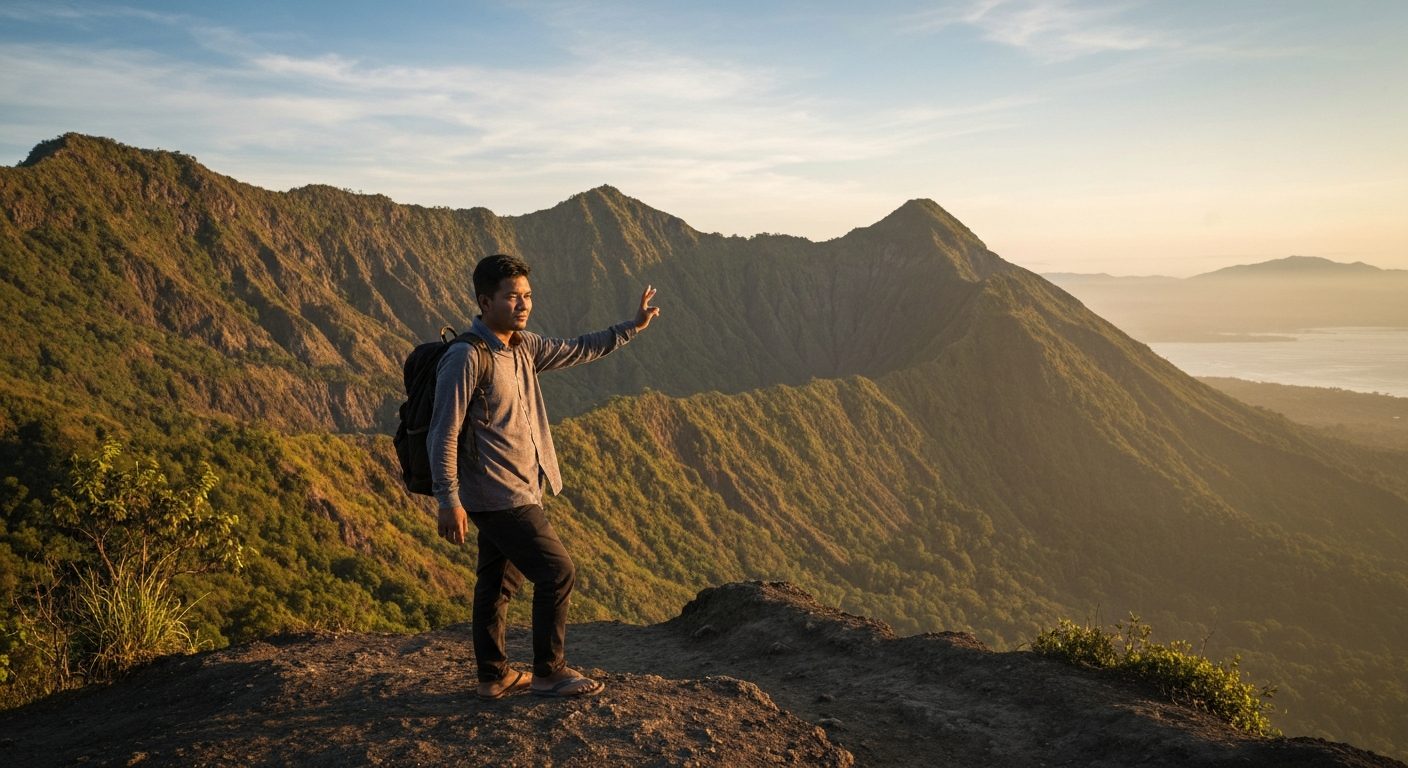
The Tumpak Sewu hiking difficulty is often underestimated by first-time visitors expecting a casual stroll to a viewpoint. Let’s be clear: descending into the Tumpak Sewu amphitheater is a true trek, requiring physical effort, proper footwear, and a healthy respect for the environment. It is a moderate-to-hard descent, not a walk in the park.
As someone who has navigated the ropes, bamboo ladders, and slippery river rocks of Tumpak Sewu more times than I can count, I’m here to give you the candid, grounded truth about what to expect. My goal is to help you honestly assess whether this memorable adventure is right for you and your group.
Understanding the Tumpak Sewu Trek Difficulty
The primary challenge of the Tumpak Sewu waterfall hike lies in the descent into the canyon and the subsequent exploration of the valley floor. While the initial viewpoint offers incredible panoramic vistas with minimal effort, reaching the base of the falls — where you truly grasp their immense scale — involves a significant physical undertaking.
The trail itself is roughly 100-150 meters of elevation change from the rim to the valley floor, but it’s the nature of this descent that makes it demanding. It’s steep, often wet, and features a mix of natural earth paths, carved steps, bamboo ladders, and fixed ropes. This isn’t a manicured staircase; it’s a dynamic, rugged trail.
The Descent: Steep, Slippery, and Rope-Assisted
The most challenging part of the Tumpak Sewu steep slippery descent begins after the initial viewpoints. You will quickly encounter a series of natural steps and sections where bamboo ladders have been installed. These ladders, while stable, are often wet and can be slippery. They require careful footing and a good sense of balance.
Following the ladders, the trail transitions into a path assisted by fixed ropes. These ropes are your handholds, guiding you down steep, muddy, and often rocky sections. They are essential for maintaining stability and preventing slips. Your hands will get dirty, and your grip will be tested. This is where the “muddy-rope realities” I talk about truly come into play. Expect to use your arms for balance and support, almost like a controlled scramble downwards.
The Valley Floor: River Crossings and Uneven Terrain
Once you reach the valley floor, the trekking continues. To fully experience Tumpak Sewu, including reaching the main horseshoe-shaped amphitheater, you will need to navigate along the riverbed. This involves multiple river crossings. The water levels vary, but generally, expect to wade through knee-deep (or sometimes even waist-deep, depending on recent rainfall) sections of the river.
The riverbed itself is composed of smooth, slippery rocks. Footing here is crucial. The current, while generally manageable, can be strong in places, especially during or after heavy rains. This is why what shoes to wear tumpak sewu waterfall is a critical consideration — regular sneakers will likely be ruined and offer poor grip.
The entire loop to the main falls and back out of the canyon can take anywhere from 2 to 4 hours, depending on your pace, how long you linger at the base, and the trail conditions.
Tumpak Sewu Rope Ladder Descent Safety: Hazards and Mitigation
Safety is paramount when undertaking the Tumpak Sewu descent. While it’s an incredibly rewarding experience, it comes with inherent risks if not approached with caution and preparedness.
Specific Hazards to Be Aware Of:
- Slippery Surfaces:
- The entire trail, from the bamboo ladders to the river rocks, is frequently wet and covered in moss or mud. This dramatically increases the risk of slips and falls. Always test your footing before committing your full weight.
- Loose Debris:
- Rainfall can dislodge rocks and soil, especially on the steeper sections. Be aware of your surroundings and avoid dislodging anything that could fall on those below you.
- Water Levels:
- The river’s depth and current can change rapidly, particularly during the rainy season (November to April). Heavy rainfall can make river crossings hazardous or even impossible. Local guides monitor these conditions closely.
- Fatigue:
- The constant concentration required for footing, combined with the physical exertion of climbing and descending, can lead to fatigue, increasing the risk of missteps.
- Lack of Handholds/Footing:
- While ropes and ladders are provided, there are still sections where natural handholds might be sparse, requiring careful balance and body positioning.
Mitigating Risks:
The best way to mitigate these risks is through preparation, caution, and the guidance of experienced locals. This is why when people ask, “is tumpak sewu dangerous?” my answer is always: it can be, if you go unprepared or without a guide. With proper planning and local assistance, the risks are significantly reduced.
Tumpak Sewu Fitness Level Requirement & Age Limits
Assessing your own fitness and the capabilities of your group is crucial for an enjoyable and safe experience. This is not a trail for everyone.
Physical Fitness:
You should have a moderate to good level of fitness for the Tumpak Sewu descent. This means:
- Comfort with walking on uneven terrain for extended periods (2-4 hours).
- Good balance and coordination.
- Sufficient upper body strength to use ropes for support.
- Ability to squat, step over obstacles, and navigate steep descents and ascents.
- No significant knee, ankle, or back problems that could be aggravated by strenuous activity or potential slips.
If you regularly hike or engage in active sports, you’re likely well-prepared. If your primary activity is sitting at a desk, you might find it very challenging.
Age Limits and Children:
There is no official Tumpak Sewu children age limit posted by the park authorities. However, from my experience, I strongly advise against bringing very young children (under 8-10 years old) on the full descent.
- Children under 8-10: Their shorter stature makes ropes and deep river crossings much harder. Their balance might not be developed enough, and they might lack the stamina or focus required for prolonged periods.
- Children 10-14: Might be able to manage with strong adult supervision and if they are active and adventurous. Consider their individual physical capabilities and comfort with challenging environments.
- Teenagers & Adults: Generally suitable if they meet the fitness requirements.
Ultimately, the decision rests with parents, but always err on the side of caution. A local guide can also provide a realistic assessment based on the child’s apparent ability at the trailhead.
What Shoes to Wear Tumpak Sewu Waterfall & What to Pack
Proper gear is not just about comfort; it’s a critical safety component for the Tumpak Sewu hike.
Essential Footwear:
This is non-negotiable. Forget flip-flops, fashion sneakers, or open-toed sandals.
- Water Shoes / Trekking Sandals with good grip: Ideal. Brands like Keen, Teva, or local equivalents offer excellent traction on wet surfaces and can handle submersion. They dry quickly.
- Old Sneakers with good grip: A decent alternative if you don’t have water shoes, but be prepared for them to get soaking wet, muddy, and potentially ruined. They will also take a long time to dry.
- Absolutely AVOID: Flip-flops, slides, Crocs (unless they are a secure, all-terrain model), or any shoe with poor tread. These dramatically increase your risk of slipping.
What to Pack Tumpak Sewu Hike:
Keep your daypack light, but include these essentials:
- Small, waterproof backpack: To protect valuables. Even if it’s not raining, you’ll be crossing water.
- Drinking water: At least 1-1.5 liters per person. Dehydration is a risk.
- Snacks: Energy bars, fruit, or small, easily digestible snacks.
- Sunscreen and hat: Even in the canyon, you’ll be exposed at times.
- Insect repellent: Especially if you’re sensitive to bites.
- Change of clothes: You will get wet and muddy. A dry set for after the hike is a luxury.
- Towel: Small, quick-dry microfiber towel.
- Waterproof camera/phone case: Protect your electronics.
- Cash: For entrance fees, guide fees, and any local snacks/drinks.
- Small first-aid kit: Band-aids, antiseptic wipes, pain relievers for minor scrapes.
Remember, every item you bring needs to be carried down and then back up. Pack smart.
Do I Need a Guide for Tumpak Sewu Waterfall?
While it is technically possible to find the trailhead and attempt the descent without a guide, I strongly, strongly recommend against it. Asking “do i need a guide for tumpak sewu waterfall?” is a question with a clear answer: Yes. For safety, efficiency, and a richer experience, a local guide is invaluable.
Why a Local Guide is Recommended:
- Safety Expertise: Local guides know the trail like the back of their hand. They can point out slippery spots, test rope integrity, assess river conditions, and choose the safest crossing points. They are often the first responders in case of a minor incident.
- Navigation: While the trail is generally marked, it can be confusing in places, especially along the riverbed. A guide ensures you stay on the safest and most efficient path.
- Assistance: They provide a steady hand on challenging sections, help carry bags (if agreed upon), and offer support for river crossings. This is particularly helpful for those less confident or with younger family members.
- Local Knowledge: Guides offer insights into the waterfall’s history, geology, and local culture. They can also help with communication if you don’t speak Indonesian.
- Emergency Preparedness: In the rare event of a serious injury, a local guide is equipped to get help and navigate the logistics of an evacuation.
- Permit and Fee Management: They handle the local entrance fees efficiently. Tumpak Sewu waterfall entrance fees are typically around IDR 10,000-20,000 per person (last verified June 2026) for foreign visitors, but this can vary. Guide fees are typically separate, ranging from IDR 200,000-350,000 per group (last verified June 2026), depending on group size and duration.
Our team at Bali Premium Trip works with licensed, vetted on-ground guides who are experts in the Tumpak Sewu area. We arrange these guides as part of our comprehensive tour packages, ensuring you have the best possible support.
Planning Your Tumpak Sewu Adventure with Banyuwangi Tours
Banyuwangi Tours, operated by Bali Premium Trip, specializes in crafting private, expert-guided adventures across East Java. We understand the nuances of trips like Tumpak Sewu and Kawah Ijen, and we handle all the logistics so you can focus on the experience.
We plan and sell private, expert-guided trips run from Bali via the Ketapang ferry by our own team plus licensed, vetted on-ground guides and operators. We arrange guides, permits and transfers; we do not own park concessions or permits ourselves, and we say so plainly. Travellers book directly with our own Bali Premium Trip reservations team at transparent, published rates with no third-party markup.
When you book with us, you’re not just getting a driver; you’re getting a meticulously planned itinerary, experienced local guides, and the peace of mind that comes from a dedicated support team. We’ve been operating since 2015 in Kuta, Bali, and our reputation is built on knowledgeable, candid service.
For a multi-day adventure covering destinations like Tumpak Sewu, Kawah Ijen’s blue fire, and perhaps even the savanna of Baluran National Park, an indicative price range for a private 4-day, 3-night trip can be around US$750-1,200 per person, last verified June 2026, depending on accommodation choices, group size, and specific inclusions. This typically covers transfers, accommodation, guides, and entrance fees.
Plan your trip with us today via our website or WhatsApp, and let us custom-design an East Java itinerary that matches your adventure aspirations and fitness level.
Important Safety Guardrail:
This article provides general trail information based on extensive experience. It is not professional safety, medical, or mountaineering advice. Readers with health, mobility, or fitness concerns should consult a doctor before undertaking any strenuous physical activity. Always hike with a licensed local guide. Trail conditions change rapidly with weather and rainfall; always heed local advice.
Frequently Asked Questions About Tumpak Sewu Hiking
Is Tumpak Sewu suitable for a casual day trip from Bali?
No, Tumpak Sewu is not suitable for a casual day trip from Bali. The journey from Bali (e.g., Kuta or Ubud) involves a 4-5 hour drive to Gilimanuk, a 1-hour ferry crossing to Ketapang, and then another 2-3 hour drive to the Tumpak Sewu area. This makes it a multi-day trip, usually combined with Kawah Ijen, with an overnight stay in Lumajang or Malang.
How long does the Tumpak Sewu waterfall hike take in total?
The full Tumpak Sewu experience, from the viewpoint, down into the amphitheater, exploring the valley floor, and ascending back up, typically takes 2 to 4 hours. This includes time for photos and soaking in the atmosphere. The actual descent and ascent portion accounts for about 30-60 minutes each way.
Can I visit Tumpak Sewu during the rainy season?
Yes, you can visit Tumpak Sewu during the rainy season (roughly November to April), but you must be prepared for potentially more challenging conditions. The trail will be muddier and more slippery, and river crossings may have higher water levels and stronger currents. Local guides will assess conditions daily and may advise against descent if it’s deemed unsafe due to heavy rainfall. The waterfalls are also at their most powerful during this time, offering a truly magnificent spectacle.
What is the best time of day to visit Tumpak Sewu?
The best time to start the Tumpak Sewu hike is early in the morning, ideally by 7:00 AM or 8:00 AM. This allows you to avoid the midday heat, experience the falls with fewer crowds, and often benefit from softer light for photography. Later in the day, especially from 10:00 AM onwards, the trail can become significantly busier.
Are there facilities at Tumpak Sewu, like toilets or food stalls?
Yes, at the main viewpoint area (the rim), there are basic toilet facilities and several local stalls selling snacks, drinks, and simple meals. There are no facilities once you descend into the canyon, so plan accordingly before you start your hike.
Are you ready to experience the incredible power of Tumpak Sewu firsthand? Let us help you plan a safe, seamless, and memorable adventure. Contact our Bali Premium Trip team today to discuss your East Java journey via our website or WhatsApp.