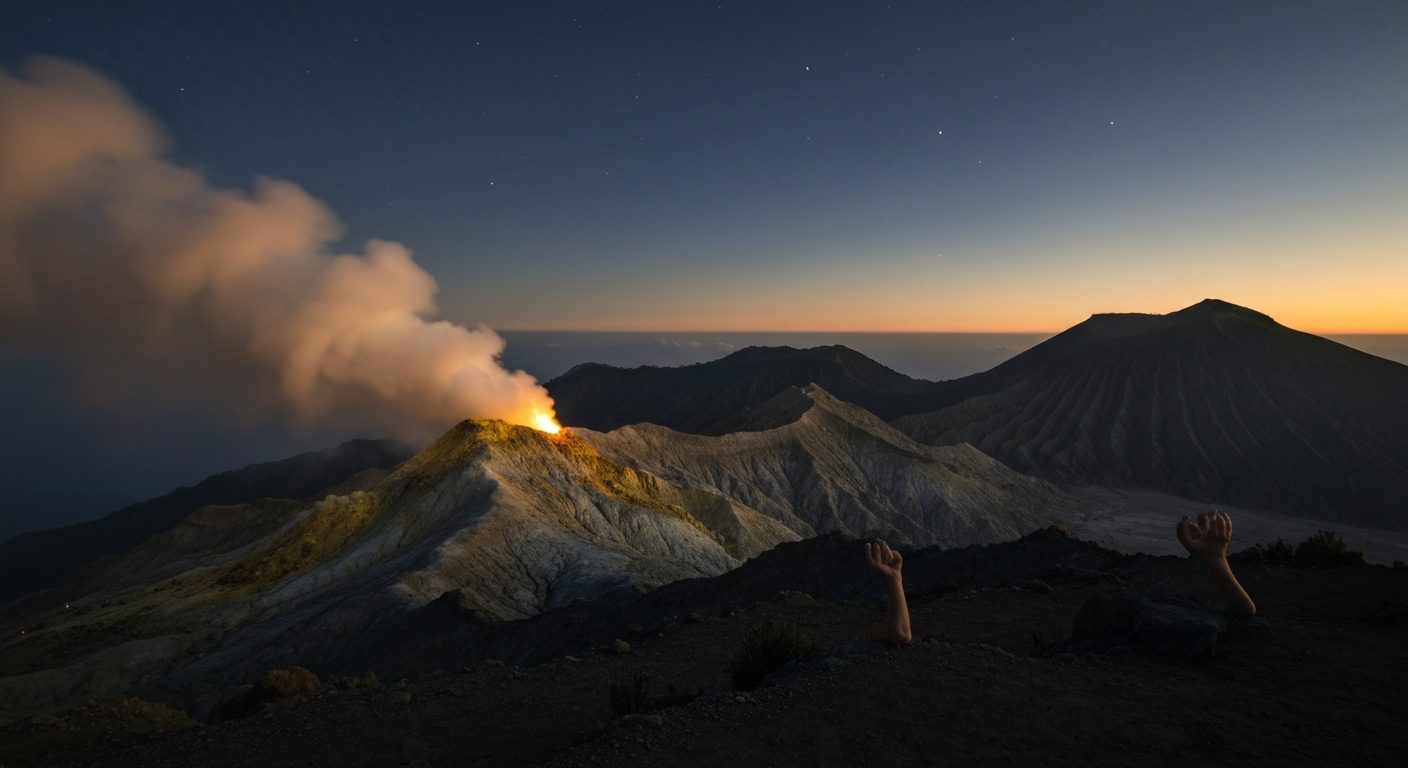
Kawah Ijen’s night hike is a sought-after adventure, but a common and valid concern for first-timers is: is Kawah Ijen safe with its toxic sulfur gas, especially during the night? The short answer is yes, for healthy, prepared visitors on a properly-equipped and guided tour, but it becomes dangerous if you try to wing it. Understanding the specific risks of the toxic sulfur gas and how to mitigate them is crucial for a safe and memorable experience.
As Banyuwangi Tours Editorial Desk, someone who has descended into the Tumpak Sewu amphitheater and climbed Kawah Ijen for the blue fire more times than I can count, I’ve seen firsthand the realities on the ground. My goal is to give you a candid, grounded perspective on what to expect, from the real hike difficulty for beginners to the essential role of a certified gas mask and the often-overlooked human story of the sulfur miners.
Understanding Kawah Ijen’s Toxic Gas: Sulfur Dioxide and Hydrogen Sulfide
The mesmerizing blue flames of Kawah Ijen are a direct result of burning sulfur, which releases two primary volcanic gases: sulfur dioxide (SO2) and hydrogen sulfide (H2S). These gases are what make safety precautions critical.
How the Gas Behaves
Sulfur dioxide (SO2) is a colorless gas with a pungent, irritating smell, often described as like a lit match. Hydrogen sulfide (H2S) is also colorless, but has a distinct “rotten egg” odor. Both are heavier than air, meaning they tend to collect in low-lying areas, particularly within the crater basin.
The concentration of these gases varies significantly. Wind direction and speed are major factors. On a clear, breezy night, gases might dissipate quickly, keeping concentrations low. However, if the wind shifts, or if the air is still, dense pockets of gas can accumulate rapidly, especially near the blue fire area and at the bottom of the crater. This is when they become a serious health hazard. Exposure can cause irritation to the eyes, nose, and throat, coughing, shortness of breath, and in high concentrations, even lead to unconsciousness or be fatal. This is why following guide instructions and having proper protection is non-negotiable.
When and Why a Certified Gas Mask is Essential
This is not a suggestion; it’s a requirement. Do I need a gas mask for Kawah Ijen sulfur mine? Absolutely. And not just any mask. You need a certified gas mask, specifically designed to filter out acidic gases like SO2 and H2S. Cheap dust masks or surgical masks offer no protection against these chemical gases. They only filter particulate matter.
A certified gas mask, often equipped with P100 cartridges (or equivalent filters for acidic gases), creates a sealed barrier around your nose and mouth, forcing all inhaled air through the chemical filters. These filters chemically react with and neutralize the toxic gases, allowing you to breathe safely, even in areas of moderate gas concentration.
Bali Premium Trip provides certified gas masks as part of our Kawah Ijen gas mask certified tour packages. Our guides will instruct you on how to properly wear and fit your mask, ensuring it’s effective. If you are not provided with one, or if you suspect the mask is inadequate, do not proceed into gas-prone areas. Your health certificate might be required for entry, and it’s for good reason – health comes first.
Here’s a quick comparison of masks:
- Certified Gas Mask (e.g., with P100 cartridges)
-
- Protection: Filters out toxic gases like SO2 and H2S, and particulate matter. Essential for Kawah Ijen.
- Features: Full face seal, specific chemical filter cartridges, often robust construction.
- Cost: Higher, but included with reputable tours.
- Use Case: Volcanic craters, industrial environments with chemical fumes.
- Dust Mask / Surgical Mask
-
- Protection: Filters out large dust particles or droplets. Offers ZERO protection against toxic gases.
- Features: Loose fit, thin material, no chemical filtration.
- Cost: Very low.
- Use Case: General dust, preventing droplet spread (e.g., during pandemics), not Kawah Ijen.
Kawah Ijen Hike Difficulty: Is It for Beginners?
The Kawah Ijen hike difficulty for beginners is often underestimated. It’s not a stroll; it’s a challenging ascent, followed by a precarious descent into the crater. While not technically difficult in terms of climbing skills, it demands good physical fitness and stamina.
The total elevation gain from the Paltuding base camp (around 1,850 meters above sea level) to the crater rim (around 2,386 meters) is significant.
The Ascent to the Crater Rim
The trail from Paltuding to the crater rim is approximately 3 kilometers long. The first kilometer is relatively flat, but the subsequent 2 kilometers are a continuous, steep uphill climb. The path is wide and well-trodden, but it’s composed of loose sand and gravel in parts, making traction challenging, especially in the dark. You’ll gain about 500 meters in altitude. Plan for 1.5 to 2 hours for this section, depending on your fitness level. Breaks are essential, and your guide will encourage them.
The Descent to the Blue Fire
This is arguably the most challenging and potentially dangerous part of the hike. From the crater rim, you descend approximately 800 meters down a narrow, rocky, and often slippery path into the crater itself to witness the blue fire. This path is not well-maintained; it’s essentially a route carved by the miners. You’ll navigate loose rocks, uneven surfaces, and sometimes sheer drop-offs. There are no handrails. You’ll need good balance, sturdy hiking shoes, and full concentration. This descent can take 30-45 minutes.
Visibility can be severely limited by darkness and gas plumes, making a headlamp crucial. Your guide will lead the way, and it’s imperative to stay close and follow their instructions precisely. If gas concentrations are too high, or if the conditions are deemed unsafe by the park rangers or your guide, the descent into the crater will be prohibited. Do not attempt to go down if advised against it.
Altitude Sickness Risk at Kawah Ijen
At ~2,386 meters (7,828 feet) at the rim, Kawah Ijen sits at an altitude where some individuals may experience mild symptoms of altitude sickness, also known as Acute Mountain Sickness (AMS). This is particularly true if you are arriving directly from sea level (like Bali) and ascending quickly.
Symptoms can include headache, nausea, dizziness, fatigue, and shortness of breath. While severe altitude sickness (HACE or HAPE) is rare at this elevation, it’s important to be aware.
To minimize the Kawah Ijen altitude sickness risk:
- Stay hydrated by drinking plenty of water.
- Avoid alcohol and caffeine before and during the hike.
- Eat light meals.
- Pace yourself during the ascent; don’t rush.
- Listen to your body. If you feel unwell, inform your guide immediately.
- Consider arriving a day early and staying in Banyuwangi or a higher-elevation guesthouse near Ijen to acclimatize, if your itinerary allows.
What to Wear for the Kawah Ijen Night Hike
Packing appropriately is key to comfort and safety. Temperatures at Kawah Ijen, especially at night and before dawn, can be surprisingly cold, often dropping to 5-10°C (41-50°F) or even lower, despite Indonesia being a tropical country.
Here’s a checklist for what to wear for the Kawah Ijen night hike:
- Layers: Essential. A base layer (long-sleeved thermal shirt), a warm mid-layer (fleece or sweater), and a waterproof/windproof outer shell jacket.
- Warm Trousers: Hiking pants or comfortable track pants. Jeans are not recommended as they get heavy if wet and offer poor insulation.
- Sturdy Hiking Shoes: Non-negotiable. Good ankle support and excellent grip are crucial for the loose terrain and steep descents.
- Warm Hat & Gloves: Your extremities lose heat quickly.
- Socks: Thick, moisture-wicking socks.
- Headlamp: With spare batteries. Crucial for navigating in the dark.
- Small Backpack: To carry water, snacks, extra layers, and your gas mask when not in use.
- Water Bottle: Stay hydrated.
- Snacks: Energy bars or fruit for sustained energy.
- Personal Medications: If you require any.
The Human Reality: Kawah Ijen Sulfur Miners
While you’re there for the blue fire, the enduring image for many visitors is the Kawah Ijen sulfur miners. These resilient men extract raw sulfur from the crater floor, often working under incredibly harsh and dangerous conditions. Their presence is a stark reminder of the realities faced by local communities.
The Miners’ Life and Loads
Approximately 200-300 miners work daily, often starting their treacherous journey down into the crater around 2 AM. They use basic tools – crowbars and baskets – to chip away at the solidified sulfur deposits. The sulfur, still hot and emitting potent gases, is then loaded into two baskets, balanced on a shoulder pole.
A typical Kawah Ijen sulfur miners porter load ranges from 60 to 90 kilograms (132-198 pounds), sometimes even more. They then make the grueling climb out of the crater and back down to the base camp, often completing two or three rounds in a single shift. This back-breaking labor, compounded by constant exposure to toxic gases, takes a severe toll on their health, leading to respiratory issues and musculoskeletal problems. Their average daily wage, while higher than many other local jobs, is still modest given the immense effort and risk.
Your Role in Porter Safety
When you encounter the miners, remember that this is their workplace.
- Give them space: Do not block their path, especially on narrow sections of the trail. They are carrying heavy loads and need clear passage.
- Be respectful: Do not treat them as a spectacle. Ask permission before taking photos, and be mindful of their arduous work.
- Consider a small tip: While not mandatory, a small gesture of appreciation for their incredible effort is always welcomed. This is their livelihood.
- Do not buy sulfur souvenirs directly from them at the crater: This encourages them to spend more time in the dangerous gas zone. Purchase souvenirs at designated shops outside the park or from local vendors in Banyuwangi, which supports the local economy in a safer manner.
Bali Premium Trip works with licensed, vetted on-ground guides and operators who understand the local dynamics and promote responsible tourism, including respectful interactions with the miners.
Is the Kawah Ijen Blue Fire Dangerous?
The Kawah Ijen blue fire is dangerous primarily because of the intense sulfur gas emissions that create it. The flames themselves are simply burning sulfur, but the proximity required to witness them means you are deep within the crater, where gas concentrations are highest.
The danger isn’t from the fire’s heat, but from inhaling the toxic gases. This reinforces the absolute necessity of a properly fitting, certified gas mask. Your guide will assess the wind conditions and gas levels. If the gas is too thick or blowing directly towards the viewing area, your guide or a park ranger will instruct you to stay back or even abort the descent into the crater. Always follow these instructions. No photo is worth your health.
General Safety Guidelines for Your Ijen Trip
Your safety is our top priority. Here are overarching guidelines for your Kawah Ijen adventure:
- Book with Experts: A Kawah Ijen gas mask certified tour with experienced guides is paramount. Our Bali Premium Trip team plans and sells private, expert-guided trips. We arrange guides, permits, and transfers from Bali via the Ketapang ferry, ensuring you’re in capable hands.
- Health Check: Before considering the hike, especially the crater descent, assess your health honestly. This is general safety information, not medical advice. Readers with asthma, heart conditions, severe respiratory issues, or pregnancy must consult a licensed doctor before attempting the hike. Get a health certificate if required.
- Follow Your Guide: Your local guide has intimate knowledge of the mountain, the weather, and gas conditions. Their instructions always override anything written here or elsewhere. They are there to keep you safe.
- Stay Hydrated & Fueled: Carry sufficient water and high-energy snacks.
- Pace Yourself: The hike is demanding. Take breaks when needed.
- No Solo Adventures: Never stray from your group or attempt to hike alone, especially in the dark.
- Respect the Environment: Do not litter. Do not disturb the natural environment or the miners.
A typical 2-day, 1-night Kawah Ijen tour from Bali, including transfers, guide, and accommodation, might range from US$180-350 per person, varying by group size and season (last verified June 2026). This indicative pricing highlights the value of a guided, safe experience.
Ready to experience the magic of Kawah Ijen safely and responsibly? Our team at Bali Premium Trip is here to help you plan your expert-guided adventure, complete with certified gas masks and experienced local guides. We handle all the logistics, from permits to transfers, so you can focus on the journey.
Plan your trip with us today via our website or a quick WhatsApp message. We’re ready to answer all your questions and craft the perfect East Java itinerary for you.
Frequently Asked Questions
Is Kawah Ijen safe for pregnant women?
No. Due to the high altitude, strenuous physical exertion, and the presence of toxic sulfur gas, the Kawah Ijen hike is not recommended for pregnant women. Consult a doctor for personalized medical advice.
Do I need a medical certificate for Kawah Ijen?
While not universally required for all visitors, some tour operators or park authorities may request a health certificate, especially for individuals with pre-existing conditions. It’s always wise to consult your doctor before undertaking a strenuous hike at altitude with gas exposure. We recommend being honest about your health when booking your tour.
What is the best time of year to visit Kawah Ijen?
The dry season, from April to October, is generally considered the best time to visit Kawah Ijen. During these months, the weather is typically clearer, and the trails are less muddy, making for a safer and more enjoyable hike. The rainy season (November to March) can bring heavy downpours, making trails slippery and increasing the risk of gas plumes being trapped in the crater.
Can I bring my own gas mask to Kawah Ijen?
You can bring your own, but ensure it is a certified gas mask with appropriate filters (e.g., P100 or specific acid gas cartridges) designed for chemical fumes, not just dust. A reputable tour operator like Bali Premium Trip will provide certified masks as part of your package, ensuring they are suitable for the conditions at Ijen.
How long is the Kawah Ijen blue fire visible?
The blue fire is typically visible from around 2:00 AM until just before sunrise, which is usually between 5:00 AM and 5:30 AM. Its intensity can vary depending on gas emissions and wind conditions. To witness it, an early morning start (often around 1:00 AM from the base camp) is necessary.