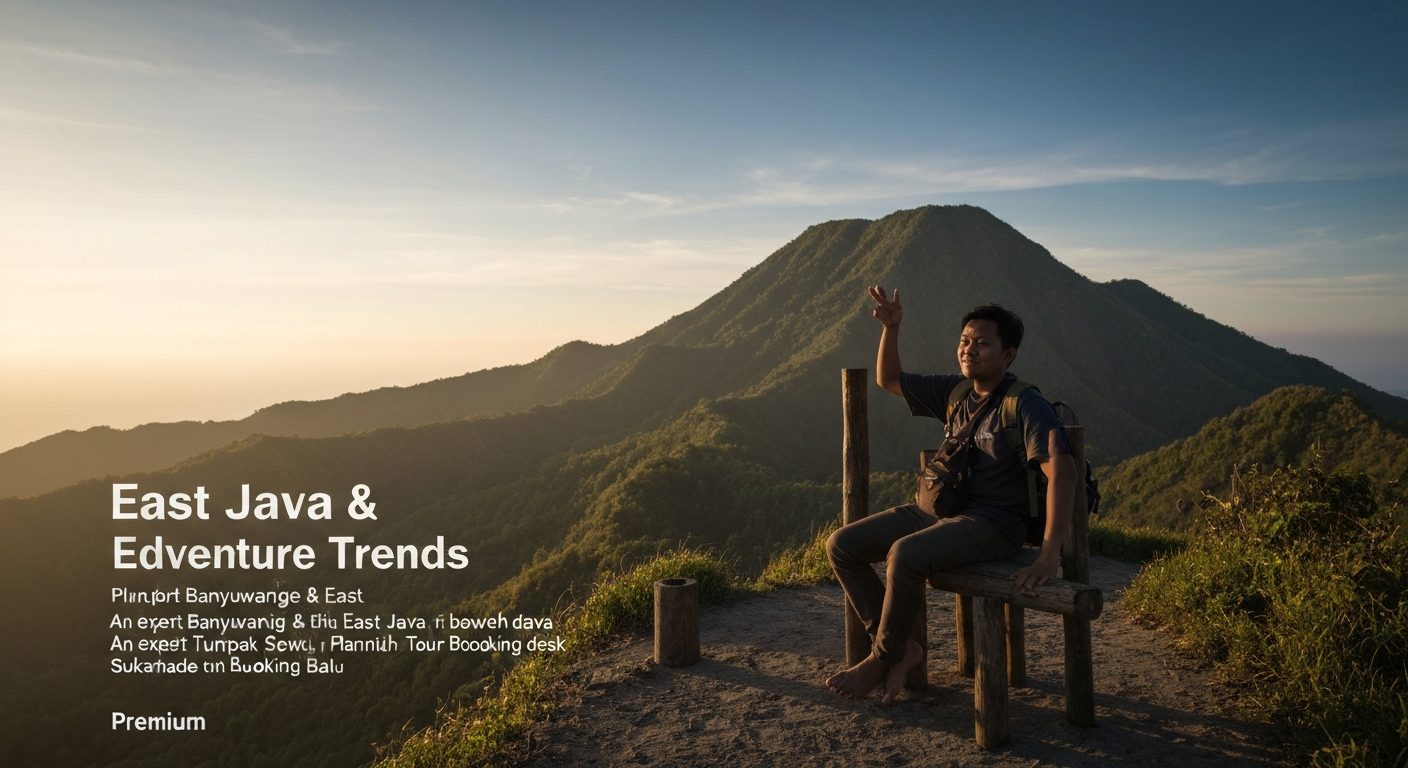
Forecasting east java adventure travel trends 2026 2027 requires a keen eye on seasonal shifts, national park policies, and local events. As Banyuwangi Tours Editorial Desk, East Java Nature & National Parks Editor at Banyuwangi Tours, I’ve spent over a decade on these trails, tracking everything from blue flame viewing windows to ranger post responsiveness. This guide provides the ground-level intelligence you need to plan your journey from Bali to East Java, ensuring you arrive well-informed about what’s true on the ground.
Planning an adventure across East Java’s diverse landscapes — from volcanic craters to savanna and pristine beaches — means understanding the rhythm of the seasons. These natural cycles dictate everything from waterfall flow to wildlife visibility and even road conditions. Our focus here is on empowering you with forward-looking information for 2026 and 2027, covering popular destinations like Kawah Ijen, Tumpak Sewu, Sukamade, Baluran, and Pulau Merah.
Navigating East Java’s Seasons: General Trends for 2026/2027
East Java experiences two primary seasons: the dry season (roughly April to October) and the wet season (November to March). Each brings its own advantages and challenges for travelers. The dry season typically offers clearer skies, easier road access, and more predictable conditions for treks. The wet season, while bringing lush greenery and full waterfalls, can also mean muddy trails, increased rainfall, and potential for temporary park closures due to safety concerns.
Indonesian School Holidays: Expect June/July Crowd Surges
A significant factor for banyuwangi school holidays travel june july is the peak domestic tourism period. Indonesian school holidays typically fall in June and July. During these weeks, expect higher visitor numbers at all major attractions, including Kawah Ijen, Tumpak Sewu, and Baluran. Accommodation prices may see a slight increase, and popular sites will feel more crowded. If your schedule allows, consider traveling outside this window for a more tranquil experience. Planning well in advance is crucial if you must travel during this period.
East Java International Tour de Banyuwangi Ijen: Dates & Impact
The East Java International Tour de Banyuwangi Ijen cycling race is an annual event that typically takes place in late July or early August. While exciting for cycling enthusiasts, it can impact local travel. Roads around Banyuwangi and towards Ijen may experience temporary closures or delays. If your trip coincides with these dates, we recommend checking the official event schedule closer to your travel date. Our team monitors these events and will advise on potential route adjustments for our booked guests.
Permit Information: Always Verify Current Status
National park and conservation area permits are mandatory for most key attractions in East Java. These regulations can change with little notice. While Banyuwangi Tours arranges all necessary permits as part of your private guided trip, it’s important to understand that these are external requirements. We work with licensed local partners to secure your entry. Permit costs (last verified June 2026) generally range from IDR 10,000-20,000 for domestic visitors and IDR 150,000-250,000 for international visitors on weekdays, often doubling on weekends and public holidays. Specific rules apply to special zones like Sukamade.
Kawah Ijen: Blue Flame, Crater Access & Weather Windows
The Kawah Ijen trek is a flagship experience, particularly for witnessing the kawah ijen blue flame 2026. This natural phenomenon is best observed in the dark, typically between 2:00 AM and 4:00 AM. Access usually opens around 1:00 AM or 2:00 AM, allowing time for the ~1.5-hour ascent to the crater rim and the descent into the crater to view the flames.
Ijen Crater Weather Conditions December January
During ijen crater weather conditions december january, which falls within the wet season, the chances of rain are higher. This can lead to muddy trails, reduced visibility, and cooler temperatures. While the blue flame is still present, cloud cover can obscure the stars, and the overall experience might be less clear than during the dry season. Park authorities may also close the crater access temporarily due to heavy rain, strong winds, or volcanic gas levels. Always be prepared for variable conditions, bringing waterproof gear and layers.
Access Considerations, Potential Closures & Guide Requirements
Kawah Ijen’s status can change based on volcanic activity. While generally stable, monitoring by the local geological agency (PVMBG) is continuous. Temporary closures, from a few hours to several days, can occur if gas levels are unsafe or seismic activity increases. These decisions are made by park management and are outside our control. We prioritize traveler safety and will always adhere to official advisories. A local guide is mandatory for the Ijen trek for safety reasons, especially for the pre-dawn descent into the crater. Our trips include experienced, licensed local guides who are familiar with the terrain and safety protocols.
Tumpak Sewu Waterfall: Best Time to Visit 2026
Often called the “Thousand Waterfalls,” Tumpak Sewu is a magnificent cascade requiring a moderate trek. The tumpak sewu best time to visit 2026 is generally during or just after the wet season, from roughly December to May. During these months, the waterfall is at its most voluminous, presenting a truly spectacular sight.
Access Routes, Safety, and Conditions
There are two main viewing points for Tumpak Sewu: the panorama viewpoint from above and the base of the waterfall. The descent to the base involves ladders, ropes, and navigating slippery rocks, which can be challenging, especially after heavy rain. Our guides ensure you navigate these sections safely. During the dry season (June to October), the water flow decreases, making the trek to the base easier but the falls less powerful. The surrounding jungle, however, remains lush year-round. Allow at least 2-3 hours for the full experience, including the trek to the base and back.
Sukamade Turtle Beach & Meru Betiri National Park: Green Season & Nesting
Sukamade Turtle Beach, located within Meru Betiri National Park, is a critical conservation area for sea turtles. Visiting Sukamade is a true adventure, involving a rugged jeep journey through dense jungle.
Best Time for Turtle Nesting & Green Season Conditions
The peak nesting season for turtles at Sukamade is from March to September, with July and August being particularly active months. During these periods, you have the highest chance of witnessing a mother turtle laying eggs on the beach at night and participating in the release of hatchlings. The green season conditions for Meru Betiri roads (November to March) mean the jungle is vibrant, but the unpaved roads can become very muddy and challenging, requiring experienced drivers and robust 4×4 vehicles. This adds to the adventure but also means longer travel times and a bumpier ride.
Logistics: Jeeps, Basic Accommodation & Permit Costs
Accessing Sukamade requires a special permit from Meru Betiri National Park. The journey typically starts from Pesanggaran or Sarongan and takes several hours by specialized jeep. Accommodation at Sukamade is basic, usually guesthouses or a simple lodge run by the park. These facilities provide a clean bed, mosquito nets, and simple meals. Expect power outages and limited connectivity. Permit costs (last verified June 2026) for Meru Betiri National Park and Sukamade access are generally around IDR 20,000-30,000 for domestic visitors and IDR 160,000-250,000 for international visitors on weekdays, increasing on weekends. This does not include the mandatory jeep rental and local guide fees.
Baluran National Park: Savanna, Banteng & Wildlife Visibility
Known as “Africa van Java,” Baluran National Park offers a unique savanna landscape. The park is a haven for various wildlife, including the elusive Javan banteng, deer, peacocks, and various bird species.
Baluran Banteng Wildlife Green Season & Wet-to-Dry Transition
The baluran banteng wildlife green season (roughly November to May) transforms the savanna into a lush, green expanse. During this time, water is abundant, and wildlife is often more dispersed. While the scenery is vibrant, spotting animals like banteng can be more challenging due to the dense vegetation. However, the wet-to-dry transition (April-June) and the early dry season (July-August) often provide excellent wildlife viewing opportunities. As water sources dwindle, animals congregate around remaining waterholes, making them easier to spot. The iconic savanna grasses turn golden brown, creating dramatic photographic backdrops.
Savanna Conditions & Other Wildlife
During the dry season (June to October), the Baluran savanna becomes parched and golden, reminiscent of African plains. The lack of foliage makes animal spotting easier. You’re likely to see herds of Javan Rusa deer, wild buffalo, and peacocks. Keep an eye out for monitor lizards and various bird species, especially near Bama Beach, which also offers a pleasant mangrove forest boardwalk. Permit costs (last verified June 2026) for Baluran National Park are similar to other national parks, typically IDR 10,000-20,000 for domestic and IDR 150,000-250,000 for international visitors on weekdays, higher on weekends.
Planning Your East Java Adventure with Banyuwangi Tours (Bali Premium Trip)
At Banyuwangi Tours, we are operated by Bali Premium Trip, a private travel concierge founded in Kuta, Bali, in 2015. We specialize in planning and selling private, expert-guided trips from Bali to East Java. Our approach is straightforward: you book directly with our own Bali Premium Trip reservations team. We believe in transparent, published rates with no third-party markup.
How We Operate: Your Journey from Bali
Our team manages your entire journey, starting from Bali. This includes transfers via the Ketapang ferry, a crucial link between the two islands. We arrange all necessary components of your trip:
- Guides: Our team includes our own licensed, vetted drivers and local guides who accompany you throughout your journey. For specific park activities, like the Ijen trek or Sukamade, we partner with specialized, licensed local guides and operators who have deep local knowledge and ensure safety.
- Permits: We handle the acquisition of all required national park and conservation area permits on your behalf. While we arrange these, it’s important to note we do not own park concessions or permits ourselves. We explicitly state this to maintain clarity.
- Transfers: From comfortable private vehicles in Bali to the specialized 4×4 jeeps needed for places like Sukamade, we coordinate all ground transfers.
Safety and Logistics: Our Commitment
Your safety and comfort are our priority. Our drivers are experienced with East Java’s varied terrain, and our local guides are not only knowledgeable about the natural environment but also trained in safety protocols. We meticulously plan logistics, anticipating challenges like seasonal road conditions or potential park closures, to provide a smooth and reassuring travel experience.
An indicative cost for a comprehensive 4-day private guided trip from Bali covering Kawah Ijen, Tumpak Sewu, and Baluran, including transfers, guides, accommodation, and permits, typically ranges around US$1,200-2,500 per person (last verified June 2026), depending on group size, accommodation choices, and exact itinerary. This range is for planning purposes; exact quotes are provided directly by our reservations team based on your custom itinerary.
Ready to explore East Java’s wonders with a team that knows the ground? plan your trip with us today. You can also reach out via WhatsApp for a quick chat about your travel ideas.
Essential Planning Considerations
Beyond the specific destinations, a few general points will enhance your East Java adventure.
East Java Adventure Travel Insurance
For any adventure travel, considering east java adventure travel insurance is a prudent step. While we meticulously plan and execute your trip, unforeseen circumstances can arise, such as medical emergencies, trip cancellations, or lost luggage. Travel insurance can provide financial protection against these eventualities. This information is for planning consideration only, not advice. We recommend consulting a licensed insurer to assess your specific needs and coverage options.
Local Currency (IDR) and Payment
The local currency is the Indonesian Rupiah (IDR). While major cities and larger hotels accept credit cards, many smaller establishments, local vendors, and park entrances (if paying directly) require cash. It’s advisable to carry a sufficient amount of IDR, especially for areas like Sukamade where ATMs are non-existent.
What to Pack
Pack light but wisely. Essentials include comfortable trekking shoes, a daypack, reusable water bottle, sun protection (hat, sunglasses, high-SPF sunscreen), insect repellent, a rain jacket (especially during the wet season), and layers of clothing for varied temperatures (cool mornings at Ijen, warm days in Baluran). For Ijen, a headlamp is essential.
Respecting Local Culture and Environment
East Java is rich in culture and natural beauty. We encourage respectful interactions with local communities and adherence to park regulations. This includes proper waste disposal, staying on marked trails, and maintaining a respectful distance from wildlife. Our guides will provide specific guidance during your trip.
Key Seasonal & Access Data
- Kawah Ijen Blue Flame
- Best Viewing: Dry season (April-Oct) for clearer skies. Wet season (Nov-Mar) possible but higher chance of rain/clouds. Access: Generally 1-2 AM opening. Mandatory local guide. Potential temporary closures due to gas levels or weather.
- Tumpak Sewu Waterfall
- Best Flow: Wet season (Nov-Mar) and immediately after (April-May). Trek to base: Easier in dry season (June-Oct), more challenging and slippery in wet season. Access: Two viewpoints (top panorama, base trek). Requires moderate fitness.
- Sukamade Turtle Beach
- Peak Nesting: March-September (July-Aug particularly active). Access: Challenging, unpaved roads via 4×4 jeep. Green season (Nov-Mar) roads can be very muddy. Basic accommodation. Special park permits required.
- Baluran National Park
- Green Savanna: Wet season (Nov-May). Wildlife Spotting: Wet-to-dry transition (April-June) and dry season (July-Oct) for easier visibility at waterholes. Access: Paved and unpaved roads, accessible by private car or jeep. Banteng often seen near water sources in dry season.
- Indonesian School Holidays
- Crowd Impact: June-July. Expect higher visitor numbers and potential for increased pricing at popular sites. Booking well in advance is highly recommended.
Frequently Asked Questions
How far in advance should I book my East Java trip?
For optimal planning and to secure preferred dates, especially if traveling during banyuwangi school holidays travel june july, we recommend booking your private guided trip with Bali Premium Trip at least 3-6 months in advance. This allows ample time for permit arrangements and itinerary customization.
Is it safe to visit Kawah Ijen during the wet season?
While ijen crater weather conditions december january can mean higher chances of rain and reduced visibility, it is generally safe if park authorities deem it so. We always follow official park advisories; if the park is open, our experienced guides ensure safety. Be prepared for mud and wet conditions.
What are the typical permit costs for national parks in East Java?
Permit costs (last verified June 2026) for international visitors generally range from IDR 150,000-250,000 on weekdays, often doubling on weekends and public holidays. Domestic visitor rates are significantly lower. These fees are typically separate from mandatory guide fees or specialized vehicle rentals.
Can I see the blue flame at Kawah Ijen year-round?
The kawah ijen blue flame 2026 is a natural phenomenon present year-round. However, visibility depends heavily on atmospheric conditions. Clear, dry season nights offer the best views. During the wet season, clouds or rain can obscure the spectacle, though it is still possible to witness it on clearer nights.
What is the best time to see wildlife at Baluran National Park?
For optimal baluran banteng wildlife green season viewing, the wet-to-dry transition (April-June) and the height of the dry season (July-October) are generally preferred. As water becomes scarcer, animals congregate around remaining waterholes, making them easier to spot against the golden savanna.
Planning an East Java adventure means stepping into a world of raw nature and unique experiences. With this forward-looking insight into east java adventure travel trends 2026 2027, you’re better prepared to make informed decisions. Our team at Banyuwangi Tours (operated by Bali Premium Trip) is ready to turn this planning into an memorable reality.
Connect with us to plan your trip. We’re also available via WhatsApp to discuss your East Java journey and build a tailored itinerary.