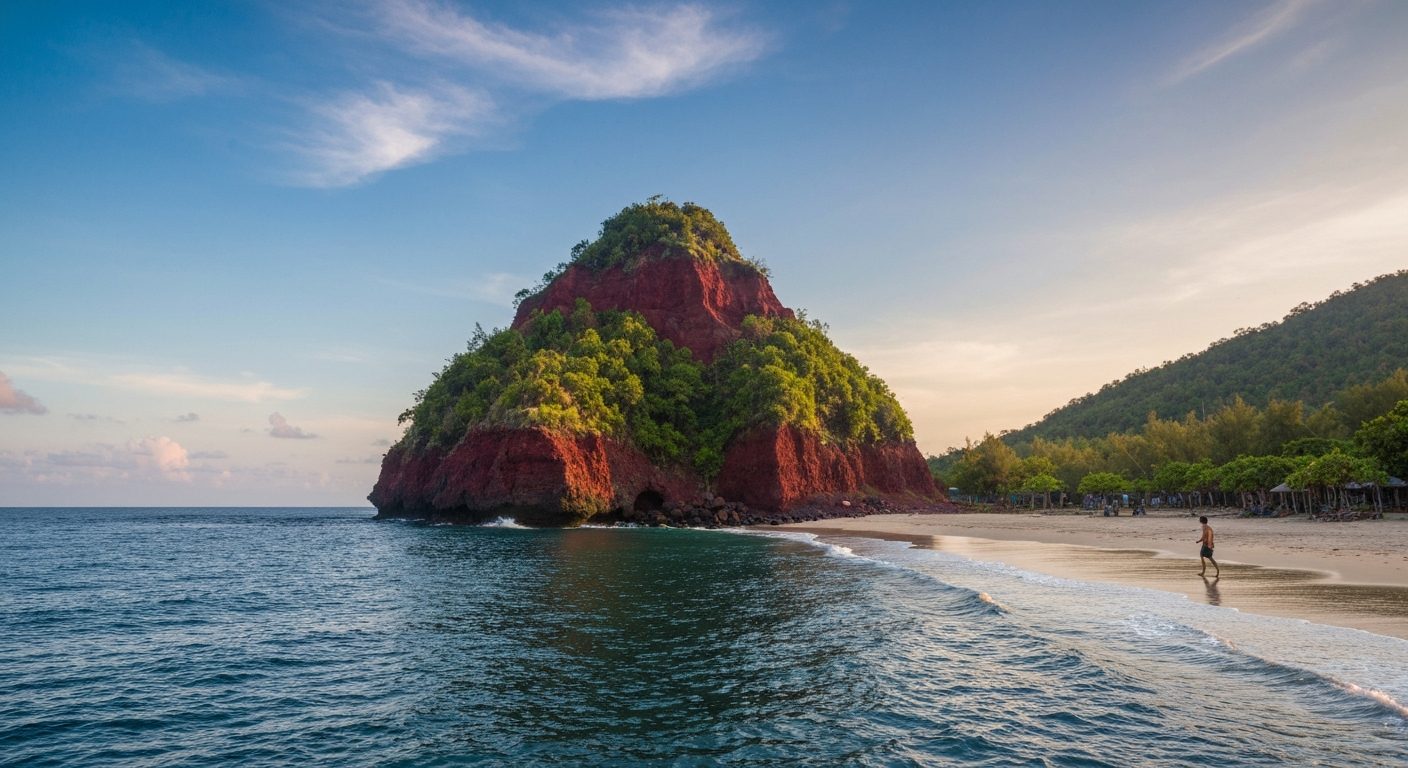
Pulau Merah Red Island Beach is a distinctive crescent of reddish sand in southern Banyuwangi, East Java, known for its gentle waves perfect for beginner surfers and its iconic offshore islet. This guide provides the candid, safety-first insights you need to understand whether this captivating spot is right for your Banyuwangi adventure.
I’m Maya, and as a researcher for Banyuwangi Tours, I’ve navigated the currents and climbed the peaks of East Java more times than I can count. While my usual beat is the challenging slopes of Ijen or the slippery descent into Tumpak Sewu, I’ve spent enough time by the ocean to appreciate its power and its potential. Pulau Merah offers a different kind of adventure, one that requires respect for the sea and an honest assessment of your own abilities.
What Makes Pulau Merah Red Island Beach Unique?
Pulau Merah translates directly to “Red Island,” a name it earns from the reddish hue of its sands, particularly striking at sunset. This coloration comes from the volcanic minerals eroded from the surrounding hills and carried to the shore. The beach itself is a long, sweeping arc, bordered by lush green hills that contrast sharply with the sand.
The most defining feature of Pulau Merah is the small, conical islet that sits just a few hundred meters offshore. This islet, also called Pulau Merah, is covered in green vegetation and accessible on foot during very low tide, though I always advise caution and local guidance if you choose to cross. It’s an essential part of the iconic postcard view of the beach, especially when framed by a fiery sunset.
The area is also part of a wider pulau merah geopark volcanic fossil tour, reflecting its geological significance. You might find ancient volcanic rock formations and even marine fossils in the surrounding cliffs, evidence of the region’s dynamic geological history. This isn’t just a pretty beach; it’s a window into the earth’s past.
The Red Sand Phenomenon
The distinctive red sand is not uniformly intense across the entire beach. It becomes most apparent when wet or under the golden light of late afternoon. This phenomenon is a natural wonder, resulting from iron oxide and other mineral deposits washed down from the nearby hillsides. It’s a visual treat that sets Pulau Merah apart from many other beaches in Indonesia.
The Iconic Islet
The small island offshore is a popular subject for photographers. During high tide, it appears completely surrounded by water, a solitary sentinel. At low tide, a sandbar or shallow channel may connect it to the mainland, allowing for a short walk. However, never attempt to reach it without checking tide times and conditions with local experts, as currents can be unpredictable.
Pulau Merah Surfing: Waves for Beginners and Beyond
Pulau Merah is widely recognized as one of Indonesia’s best spots for pulau merah surfing lessons and waves for beginners. Its long, rolling beach breaks offer a forgiving environment for those just starting out, while still providing enough punch for intermediate surfers on bigger days.
Beginner-Friendly Beach Breaks
The waves here typically break consistently over a sandy bottom, making it less intimidating than reef breaks. The swell usually comes in at a manageable size, creating gentle, long rides that are ideal for practicing pop-ups and finding your balance. You’ll see many local surf schools lining the beach, offering board rentals and lessons. When choosing a school, ensure they are certified and have experienced instructors who prioritize safety. Ask about their student-to-instructor ratio and emergency procedures.
When to Surf Pulau Merah
The best time to visit pulau merah red island for surfing generally aligns with Banyuwangi’s dry season, from April to October. During these months, the wind conditions are often favorable, and the swells are more consistent. However, even within the dry season, wave sizes can vary.
- Small Swell Days (Often Dry Season)
- Ideal for absolute beginners. Waves are gentle, providing ample time to catch and stand up. Rip currents are generally weaker.
- Medium Swell Days (Transition Months/Dry Season)
- Good for progressing beginners and intermediates. Waves have more power but remain manageable. Expect more surfers in the water.
- Large Swell Days (Rare, but can occur in Wet Season)
- Can be challenging, even for experienced surfers. Rip currents will be stronger. Not recommended for beginners. Always check local reports.
Surfing Lessons and Equipment
You’ll find numerous small surf shacks along the beach offering lessons and board rentals. Expect to pay an indicative price range of IDR 100,000 – 200,000 (US$7-14) for a board rental for a few hours, and IDR 250,000 – 400,000 (US$17-27) for a beginner lesson (last verified June 2026). Always negotiate politely and clarify what’s included (board, instructor, duration). For a productive lesson, ensure your instructor stays with you in the water, providing real-time feedback.
Pulau Merah Snorkeling, Diving, and Ocean Safety
While Pulau Merah is celebrated for its surf, it’s crucial to approach any water activity with caution and respect for the ocean. Pulau Merah snorkeling safety and rip currents are important considerations, especially for those less experienced in dynamic marine environments.
Snorkeling Considerations
The immediate beach area of Pulau Merah is primarily sandy, with limited coral or marine life close to shore. Snorkeling directly off the main beach might not yield the vibrant underwater scenes you’d find in a dedicated coral reef spot. For better snorkeling, you would typically need to venture to nearby areas like Green Bay (Teluk Hijau), which offers clearer waters and more diverse marine ecosystems.
If you do snorkel at Pulau Merah, stay close to shore and be acutely aware of the currents, particularly if there are waves. Swimmers without fins can be pulled quickly by moving water.
Rip Currents and Ocean Hazards
Like many open ocean beaches, pulau merah snorkeling safety and rip currents are a reality here. Rip currents are strong, narrow currents of water flowing away from the shore, often appearing as a channel of choppy, discolored water or a break in the incoming wave pattern.
How to identify and survive a rip current:
- Look for: A channel of churning, choppy water; a line of foam, seaweed, or debris moving steadily seaward; a noticeable break in the incoming wave pattern.
- If caught: Don’t panic. Don’t fight the current by swimming directly against it. Instead, swim parallel to the shore until you are out of the current, then swim back to the beach. If you can’t swim out, float or tread water and wave for help.
Local lifeguards or the BPBD (Badan Penanggulangan Bencana Daerah – Regional Disaster Management Agency) might be present, especially on busier days, but never solely rely on them. Personal responsibility for safety is paramount.
Diving at Pulau Merah?
Is pulau merah safe for beginner divers? Generally, Pulau Merah itself is not considered a primary diving destination due to the sandy bottom and often turbulent surf conditions. The visibility can be variable, and the marine life directly off the main beach is less diverse compared to dedicated dive sites.
If you are a beginner diver looking for an introduction to the underwater world in Banyuwangi, it’s advisable to seek out licensed dive operators who can take you to more suitable, protected sites. These might be further offshore or in calmer bays. Always verify a dive operator’s credentials, safety record, and equipment maintenance.
Marine Life and Risks
Regarding pulau merah shark and jellyfish risk diving, significant shark attacks are extremely rare in this region. Most sharks in coastal Indonesian waters are reef sharks, which are generally harmless to humans unless provoked. Jellyfish stings can occur, especially during certain seasons. Most are mild, but some species can cause more significant discomfort. Wearing a rash guard or wetsuit can offer protection. Always consult local experts about recent sightings or conditions.
Important Safety Disclaimer: The information provided here is for general guidance only and is not a substitute for professional safety instruction, medical advice, or certified diving/surfing lessons. Before engaging in any water activity, always consult with certified surf schools, licensed dive operators, and local lifeguards or BPBD for real-time conditions and expert advice. Your safety is your responsibility.
Practicalities: Access, Fees, and Best Time to Visit
Getting to and experiencing Pulau Merah is straightforward, but knowing the logistics helps.
How to Get to Pulau Merah from Bali Ketapang
If you’re traveling from Bali, your journey will involve a ferry crossing from Gilimanuk (Bali) to Ketapang (Banyuwangi). The how to get to pulau merah from bali ketapang route then continues overland. Pulau Merah is located approximately 60-70 kilometers south of Banyuwangi city center, a drive that typically takes around 1.5 to 2 hours, depending on traffic and road conditions.
- From Ketapang Ferry Terminal: You can arrange a private car or hire a local taxi. Public transport options are limited and often involve multiple transfers, which can be time-consuming.
- With Bali Premium Trip: We arrange all transfers directly from your accommodation in Bali, including the ferry crossing and onward private vehicle to Pulau Merah. This ensures a seamless and comfortable journey, allowing you to relax and enjoy the scenery.
Pulau Merah Red Sand Beach Entrance Fee
Accessing Pulau Merah is generally affordable. The pulau merah red sand beach entrance fee is collected at a small gate before you reach the main beach area.
- Local Visitors (WNI): IDR 10,000 per person
- Foreign Visitors (WNA): IDR 50,000 per person
(Last verified June 2026. Prices may vary slightly or change without prior notice.)
There might be additional small fees for parking motorcycles or cars. These fees contribute to the maintenance of the beach facilities.
Best Time to Visit Pulau Merah Red Island
The best time to visit pulau merah red island is during the dry season, which runs from April to October.
- Dry Season (April – October): Characterized by sunny skies, less humidity, and generally calmer conditions. This is ideal for surfing, sunbathing, and exploring. The waves are often consistent and beginner-friendly.
- Wet Season (November – March): Expect more rainfall and higher humidity. While the beach is still accessible, heavy rains can make roads slippery, and ocean conditions might be rougher with stronger currents. Surfing during this season might cater more to experienced individuals due as swells can be larger and less predictable.
Weekdays are typically quieter than weekends and public holidays, when the beach can attract large numbers of local visitors. If you prefer a more tranquil experience, aim for a weekday visit.
Beyond the Waves: Sunset and Nearby Adventures
Pulau Merah offers more than just surfing. It’s a place to relax, capture incredible photos, and explore the natural beauty of southern Banyuwangi.
Pulau Merah Surfing Sunset Banyuwangi
The sunsets at Pulau Merah are legendary. As the sun dips below the horizon, it casts a warm, fiery glow that intensifies the red pigments in the sand, creating a spectacular display of color. This is the prime time for photography, with the offshore islet silhouetted against the vibrant sky. Even if you’re not surfing, watching the surfers catch the last waves of the day against this backdrop is a memorable experience. Many visitors stay until after dark to fully appreciate the twilight colors.
Along the beachfront, you’ll find numerous warungs (small local eateries) and food stalls offering fresh seafood, Indonesian staples, and refreshing drinks. It’s a great spot to grab a bite and soak in the relaxed atmosphere.
Green Bay Banyuwangi Island Hopping
A short drive or boat trip from Pulau Merah will take you to Teluk Hijau, or green bay banyuwangi island hopping. This secluded bay is truly a slice of paradise, named for the striking emerald green color of its waters. It’s often accessed by a short trek through the forest or by a local boat from a nearby beach like Rajegwesi.
Green Bay is known for its calm, clear waters, making it an excellent spot for swimming and snorkeling (conditions permitting). The beach is much smaller and more intimate than Pulau Merah, surrounded by dense jungle. It’s a fantastic option for those seeking a more tranquil natural experience away from the surfing crowds. A typical visit to Green Bay might involve hiring a local boat for an hour or two, or joining a small tour.
Other nearby natural attractions include Sukamade Turtle Beach (part of the Meru Betiri National Park), although reaching Sukamade is a significant journey, often requiring a 4×4 vehicle and an overnight stay to witness turtle nesting.
Planning Your Banyuwangi Adventure with Bali Premium Trip
Pulau Merah is a fantastic addition to any Banyuwangi itinerary, offering a different flavor of East Java’s diverse natural attractions. At Banyuwangi Tours, operated by Bali Premium Trip, we specialize in crafting personalized adventures that seamlessly connect iconic destinations like Pulau Merah with the dramatic landscapes of Kawah Ijen, the wild savannas of Baluran, and the unique experience of Sukamade.
We pride ourselves on offering knowledgeable, candid, and grounded advice. We plan and sell private, expert-guided trips run from Bali via the Ketapang ferry. Our trips are managed by our own team, working alongside licensed and vetted on-ground guides and operators. We arrange all necessary guides, permits, and transfers for your convenience. Please note that we do not own park concessions or permits ourselves; instead, we secure them through our established network of local partners, ensuring you have legitimate access and support.
A multi-day Banyuwangi trip covering destinations like Pulau Merah, Ijen, and Sukamade might range from US$350-750 per person for a 2-3 day itinerary, depending on group size, accommodation choices, and included activities (last verified June 2026). This indicative price range covers private transport, expert guiding, and key entrance fees, allowing for a comfortable and comprehensive exploration of the region.
Ready to explore the red sands and green bays of Banyuwangi?
Plan your trip with us today, and our Bali Premium Trip reservations team can help you build an itinerary that balances adventure with comfort and safety. We’re also available for planning via WhatsApp.
Frequently Asked Questions
Is Pulau Merah suitable for families with young children?
Yes, Pulau Merah can be suitable for families, especially if the children are interested in playing on the sand or trying beginner surf lessons. The waves are generally gentle enough for supervised water play. Always keep a close eye on children near the water, and be mindful of sun exposure.
Are there facilities like restrooms and food stalls at Pulau Merah?
Yes, Pulau Merah has basic facilities. You’ll find public restrooms (often with a small fee for use), small local warungs selling food and drinks, and surf schools offering rentals and lessons. There are also shaded areas and seating available.
Can I reach the offshore islet (Pulau Merah) by walking?
The offshore islet is sometimes accessible on foot during very low tides via a sandbar. However, it is crucial to consult with local guides or lifeguards about tide times and current conditions before attempting to cross. Tides can change quickly, and currents can be strong, posing a safety risk. It’s generally safer and more enjoyable to admire it from the main beach.