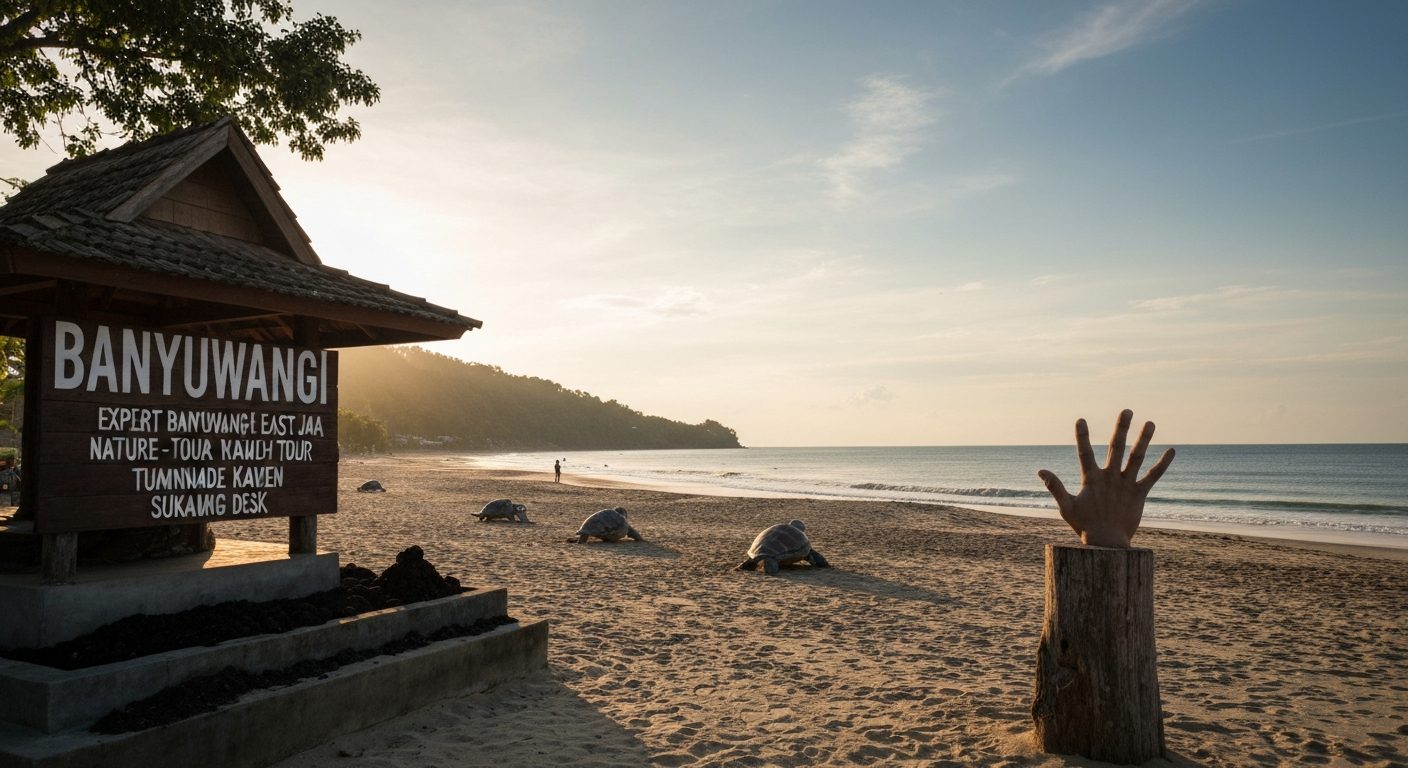
If you’re planning a trip to East Java, this Banyuwangi travel guide covers the main attractions and things to do for an memorable experience. Banyuwangi, often called “The Sunrise of Java,” serves as your essential base for exploring some of Indonesia’s most dramatic natural landscapes. From fiery craters to remote turtle nesting beaches and savannas that echo Africa, this region offers a diverse itinerary for any traveler.
As Banyuwangi Tours Editorial Desk, the East Java Nature & National Parks Editor at Banyuwangi Tours, I’ve spent over a decade on these trails. I’ve seen the savanna green and brown, logged which permits actually get checked, and know which ranger posts answer the phone. This guide consolidates that ground-level knowledge, ensuring you arrive prepared and confident. We’ll outline the best things to do in Banyuwangi for a first-time visit, including iconic sunrise spots and lesser-known locations for photography.
Getting to Banyuwangi: Your Gateway to East Java
Banyuwangi’s strategic location makes it easily accessible, particularly if you’re traveling from Bali. The Ketapang ferry port connects Gilimanuk, Bali, directly to Banyuwangi. The crossing takes approximately 45-60 minutes. Ferries run 24/7. Banyuwangi Blimbingsari Airport (BWX) also offers direct flights from Jakarta and Surabaya, making it a convenient entry point for international arrivals.
For travelers coming from Bali, our team at Bali Premium Trip regularly arranges private transfers from your accommodation directly to Ketapang ferry, and then continues your journey into East Java with our licensed, vetted on-ground guides and vehicles. This seamless transfer ensures you focus on the adventure, not the logistics.
Kawah Ijen: Blue Fire, Crater Lake & Sunrise Trek
Kawah Ijen is probably what Banyuwangi is most known for. This active volcano is famous for two distinct phenomena: its electric blue flames, visible only in pre-dawn darkness, and its turquoise, highly acidic crater lake, best viewed at sunrise.
The Ijen Blue Fire Trek:
To witness the blue fire, you need to start your ascent around 1:00 AM. The trek itself from the Paltuding ranger post to the crater rim is approximately 3 kilometers, taking about 1.5 to 2 hours depending on your pace. The trail is well-trodden but challenging in parts, with a steep incline. From the crater rim, descending into the crater to see the blue flames requires caution. The path down is rocky and can be slippery. This segment is not officially sanctioned by the park authorities due to safety concerns regarding toxic gas exposure and the inherent dangers of navigating a loose rock trail in the dark. If you choose to go, local sulfur miners often act as unofficial guides, offering assistance for a small fee.
Crater Lake Sunrise:
Whether you descend for the blue fire or wait at the rim, the sunrise over the Ijen crater lake is a spectacular reward. As the sun rises, the vast, milky-blue lake reveals itself, contrasting with the yellow sulfur deposits and the surrounding volcanic landscape. The air quality improves significantly after sunrise, but gas masks are still advisable due to sulfur fumes. We provide these on our guided tours.
Permits and Guides for Ijen:
Entry permits for Kawah Ijen are required and can be purchased at the Paltuding ranger post. Last verified June 2026, fees were around IDR 100,000-150,000 on weekdays and IDR 150,000-250,000 on weekends/public holidays for foreign visitors. These fees are separate from any guiding services. While it’s technically possible to do Ijen solo, particularly if you’re an experienced trekker, we strongly recommend a local guide for safety, navigation in the dark, and understanding the local conditions. Our Bali Premium Trip tours always include expert local guides for Ijen. They know the safe routes and how to manage the gas.
Best Season: The dry season, from May to October, offers the clearest skies and most stable trekking conditions. Rain during the wet season (November to April) can make the trails very slippery and increase the risk of gas concentration.
Tumpak Sewu Waterfall: Java’s “Niagara”
Often dubbed the “Niagara of Indonesia,” Tumpak Sewu waterfall is an awe-inspiring sight, not actually in Banyuwangi proper, but a manageable drive away, usually combined with a Mount Bromo or Ijen itinerary. Located in Lumajang Regency, this massive waterfall system plunges multiple curtains of water from a horseshoe-shaped cliff. It’s truly impressive.
Viewing Tumpak Sewu:
There are two main ways to experience Tumpak Sewu. The first is from the panoramic viewpoint at the top, offering a sweeping vista of the entire waterfall. This is easily accessible from the parking area via a short walk and is suitable for all fitness levels. This spot is excellent for photography, especially in the morning light.
The second, more adventurous option, is to descend to the base of the waterfall. This involves a challenging, often slippery trek down a bamboo ladder and rope system through dense jungle. The descent takes about 45 minutes to an hour. Reaching the base allows you to feel the immense power of the falls and capture incredible close-up photos. Be prepared to get wet and wear appropriate footwear with good grip. A local guide is highly recommended for the descent for safety and navigation.
Permits and Guides for Tumpak Sewu:
Entry to the viewpoint and the trek to the base requires a permit, typically around IDR 10,000-20,000 per person (last verified June 2026). While the viewpoint can be visited solo, descending to the base without a local guide is not advisable. The terrain is tricky, and conditions can change quickly. Our Bali Premium Trip guides can arrange this for you, ensuring a safe and informed experience.
Best Season: Like Ijen, the dry season (May to October) is ideal. The water flow is still substantial, but the trails are less muddy and less prone to flash floods.
Sukamade Turtle Beach: Meru Betiri’s Nesting Shores
Deep within the protected Meru Betiri National Park lies Sukamade, a remote beach sanctuary known for its regular turtle nesting activity. This is not a luxury resort experience; it’s a raw, natural encounter where conservation takes precedence.
The Sukamade Experience:
Getting to Sukamade is an adventure in itself. From the nearest town, Pesanggaran, it requires a roughly 2-hour journey by 4×4 jeep through dense jungle, crossing rivers, and navigating rough terrain. This isn’t a route for standard vehicles. Once you arrive at the simple guesthouse accommodations near the beach, you’ll have dinner and then, after dark, head to the beach with a park ranger. The aim is to observe female turtles (Green, Olive Ridley, Hawksbill, and Leatherback species) coming ashore to lay their eggs. This is a natural process, and sightings are never guaranteed, but the rangers have deep knowledge of typical nesting patterns. If you’re lucky, you may also witness baby turtles being released into the ocean the following morning.
Permits and Guides for Sukamade:
Meru Betiri National Park entry permits are mandatory. Last verified June 2026, foreign visitor fees were around IDR 150,000-225,000 on weekdays and IDR 225,000-350,000 on weekends/public holidays. An additional fee for the 4×4 jeep is also required, typically paid per vehicle. A local park ranger must accompany all visitors to the beach at night. This is non-negotiable for conservation and safety reasons. Independent travel to Sukamade is extremely difficult and strongly discouraged due to the remote location, challenging access, and strict park regulations. Our Bali Premium Trip tours handle all jeep arrangements, park permits, and local ranger coordination.
Best Season: Turtle nesting occurs year-round, but the peak season for Green Turtles is typically March to May, and for Olive Ridley turtles, it’s June to September. The dry season (May to October) makes the jeep journey more manageable, as river crossings are less challenging. However, rain can occur at any time in the jungle.
Baluran National Park: The “Africa of Java”
Travelers often compare Baluran National Park to the African savanna, and for good reason. This dry, open grassland landscape, dotted with acacia trees and backed by Mount Baluran, provides a unique ecological contrast to Java’s typical lush greenery.
Exploring Baluran:
The main draw of Baluran is its expansive savanna, Bekol, where you can spot various wildlife. Keep an eye out for Javan rusa deer, water buffalo (banteng), monitor lizards, and a wide array of bird species. The best time for wildlife viewing is early morning or late afternoon when animals are most active. After exploring the savanna, head to Bama Beach, a quiet stretch of coastline with mangroves and calm waters. It’s a peaceful spot for a picnic or a swim, with some decent snorkeling opportunities directly off the beach.
Permits and Guides for Baluran:
Entry permits for Baluran National Park are required and can be purchased at the main gate. Last verified June 2026, foreign visitor fees were around IDR 150,000-225,000 on weekdays and IDR 225,000-350,000 on weekends/public holidays. While Baluran is more accessible than Sukamade and can be explored independently with your own vehicle (car or scooter), having a guide enhances the experience. Our expert guides know the best spots for wildlife viewing and can share insights into the park’s ecology. The park is well-marked, but local knowledge helps.
Best Season: The dry season, from May to October, is ideal. The savanna is at its driest and most ‘African,’ with animals congregating around water sources, making them easier to spot. The wet season (November to April) transforms the savanna into a greener landscape, which also has its own beauty, but wildlife can be more dispersed.
Pulau Merah: Surf, Sand & Sunset Coast
Pulau Merah, or Red Island, is a relaxed coastal area about 20 kilometers south of Banyuwangi city. It’s a popular spot for both beginner surfers and those seeking a beautiful sunset view without the crowds of Bali.
Activities at Pulau Merah:
The beach gets its name from a small, reddish island just offshore, accessible on foot at low tide. The waves here are generally gentle and consistent, making it an excellent place to learn to surf. Several local surf schools offer board rentals and lessons. Even if you’re not surfing, the long stretch of sand is perfect for walking, relaxing, and enjoying the ocean breeze. As the day ends, Pulau Merah lives up to its “Sunset Coast” reputation. The sun dips below the horizon, often painting the sky in fiery hues that complement the island’s name. This is a prime Banyuwangi sunset spot for photography.
Permits and Guides for Pulau Merah:
There is usually a small entry fee to the beach area, around IDR 10,000-15,000 per person (last verified June 2026). No special permits are needed beyond this. Pulau Merah can easily be visited independently. If you’re interested in surfing, local instructors are readily available. Our Bali Premium Trip itineraries can include a visit here, often combined with other southern Banyuwangi attractions.
Best Season: The dry season (May to October) generally offers calmer weather and clearer skies for sunsets. Surf conditions are often good during this period as well.
Beyond the Headlines: Other Banyuwangi Highlights & Photo Spots
While Ijen, Tumpak Sewu, Sukamade, Baluran, and Pulau Merah are the region’s main draws, Banyuwangi offers more for those with extra time or specific interests.
- De Djawatan Forest: Near Benculuk, this ancient teak forest resembles something out of a fantasy film, with gnarled, moss-covered trees. It’s a popular Banyuwangi Instagram photo spot 2026, particularly for its ethereal atmosphere.
- Bangring Banyuwangi (Mangrove Forest): This well-maintained mangrove conservation area near the city offers boardwalks through the trees, providing opportunities for birdwatching and peaceful walks. It’s a good place for a quiet afternoon.
- Teluk Hijau (Green Bay): Another gem within Meru Betiri National Park, accessible by boat from Rajegwesi or by a challenging trek. It’s a secluded beach with clear turquoise waters and lush surroundings. Requires an additional park permit and local guide arrangements.
- Watudodol Beach: Just north of Banyuwangi city, this beach features a distinctive rock formation resembling a giant human head. It’s an accessible Banyuwangi sunrise spot with views towards Bali.
- Kalibaru Plantations: If you’re traveling further west towards Surabaya, the area around Kalibaru is known for its coffee, rubber, and cocoa plantations. You can often arrange tours to learn about the production process.
Planning a first-time Banyuwangi tour can seem like a lot to coordinate, especially with varying permit requirements and challenging logistics for remote sites like Sukamade. Our team at Bali Premium Trip specializes in designing private, expert-guided East Java highlights tours that run seamlessly from Bali. We arrange all guides, permits, and transfers. We do not own park concessions or permits ourselves; we simply facilitate their acquisition for you through licensed local partners, ensuring you have the correct documentation for every experience.
If you’re ready to explore these incredible landscapes without the stress of planning, we invite you to plan your trip with us. Our reservations team is available via WhatsApp to help you craft a personalized 2-4 day itinerary that matches your interests and pace.
Planning Your Banyuwangi Trip: Seasons, Permits & Guides
To help you visualize your Banyuwangi sightseeing tour, here’s a quick overview of key considerations:
- Best Overall Season
- Dry season (May to October) generally offers the most favorable weather conditions across all attractions, with less rain and clearer skies. However, this is also peak travel season.
- Wet Season Travel
- November to April. While still possible, expect rain, potentially challenging road conditions for Sukamade, and slipperier trails for Ijen and Tumpak Sewu. Wildlife in Baluran might be more dispersed. Some operators offer lower rates during this period.
- Permit Requirements
- Mandatory for Kawah Ijen, Meru Betiri National Park (Sukamade & Teluk Hijau), Baluran National Park, and Tumpak Sewu Waterfall. Fees are typically higher for foreign visitors and on weekends/public holidays (last verified June 2026). Our tours arrange these on your behalf.
- Guide Necessity
-
- Highly Recommended: Kawah Ijen (especially for blue fire), Tumpak Sewu (for base descent), Sukamade (mandatory park ranger + 4×4 driver).
- Recommended (for enhanced experience): Baluran National Park, Teluk Hijau.
- Optional: Pulau Merah, De Djawatan Forest, Bangring Mangrove.
A typical 3-day, 2-night private guided tour covering Kawah Ijen, Sukamade, and Baluran from Bali, including transfers, accommodation, permits, and guides, typically runs from US$700-1,200 per person (indicative price range, varies by group size, accommodation choices, and season; last verified June 2026). This range gives you an idea of the investment for a comprehensive East Java highlights tour.
Frequently Asked Questions about Banyuwangi
What is Banyuwangi known for?
Banyuwangi is primarily known for Kawah Ijen, an active volcano famous for its rare blue flames and acidic turquoise crater lake. It’s also a gateway to other significant natural attractions like Baluran National Park (“Africa of Java”), Sukamade Turtle Beach, and the impressive Tumpak Sewu waterfall.
How many days do you need for Banyuwangi?
For a first-time Banyuwangi tour focusing on highlights, a 2-4 day itinerary is generally recommended. A 2-day trip could cover Kawah Ijen and perhaps Pulau Merah. A 3-4 day trip allows you to include Sukamade Turtle Beach, Baluran National Park, and potentially Tumpak Sewu (which requires dedicated travel time).
Is it safe to travel to Banyuwangi?
Yes, Banyuwangi is generally safe for travelers. The main risks are related to natural environments, such as slippery trails at Ijen and Tumpak Sewu, or challenging road conditions to Sukamade. Always follow local guide instructions, especially in national parks and volcanic areas. Our tours prioritize your safety with experienced local guides and vetted transport.
Can I visit Kawah Ijen without a guide?
While technically possible to trek to the Ijen crater rim independently, it is strongly advised to go with a local guide, especially if you plan to see the blue fire or descend into the crater. Guides provide essential safety information, navigate in the dark, and understand the unpredictable nature of sulfur gas emissions.
What is the best time for Banyuwangi sunrise sunset spots photography?
For Kawah Ijen, sunrise over the crater lake is spectacular. For general landscape photography, the dry season (May-October) offers clearer skies. Pulau Merah is renowned as a Banyuwangi sunset spot, particularly from 5:00 PM onwards. De Djawatan Forest is best visited in the morning for its mystical light.
Ready to see these incredible places for yourself? Our Bali Premium Trip team is here to help you design the perfect private tour, handling all the details from permits to transportation, so you can simply enjoy the adventure. Don’t hesitate to plan your trip with us; we’re ready to assist via WhatsApp or email.